
How to Build a Free Options Trade
Learn to build zero-cost options trades on ThinkOrSwim using risk reversals, collars, and ratio spreads. Includes ThinkScript scanner, Greeks analysis, Volatility Box strike selection, and step-by-step TOS setup for 3 premium-neutral strategies.
- What Is a "Free" Options Trade?
- Risk Reversals Explained
- The Collar Strategy for Zero-Cost Protection
- Ratio Spreads: Funded Directional Bets
- When to Use Each Strategy
- ThinkOrSwim Setup Walkthrough
- Greeks Analysis for Zero-Cost Structures
- ThinkScript Scanner for Zero-Cost Candidates
- Risk Management Rules
- Volatility Box Integration for Trade Timing
- Practical Example: Zero-Cost Risk Reversal on SPY
- Common Mistakes to Avoid
- Frequently Asked Questions
What Is a "Free" Options Trade?
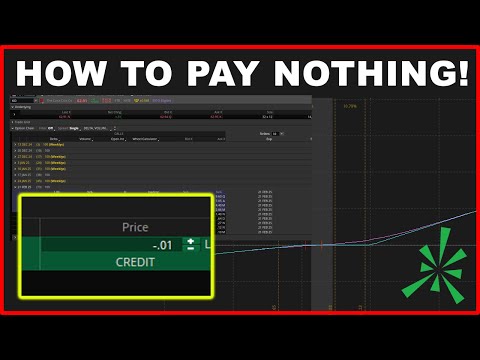
A free options trade is a multi-leg options position structured so the premium collected from sold options offsets the premium paid for purchased options. The net debit is zero or close to it. You are not paying out of pocket to enter, though margin requirements and risk still apply.
These structures work because of the relationship between implied volatility, strike selection, and expiration timing. The goal is to use overpriced options (those with elevated IV) to fund the purchase of options with a more favorable risk/reward profile. Common structures include risk reversals, collars, and ratio spreads.
Risk Reversals Explained
A risk reversal combines a long call (or put) with a short put (or call) at different strikes but the same expiration. The premium from the sold option finances the purchased option. If structured correctly, the net cost is zero.
For a bullish risk reversal, you sell an out-of-the-money (OTM) put and use that premium to buy an OTM call. You collect premium from the put sale, and that premium pays for the call purchase. Your breakeven is the call strike, and your downside risk begins below the put strike.
| Component | Strike | Premium | Net Effect |
|---|---|---|---|
| Sell OTM Put | $95 | +$2.40 | Collect premium |
| Buy OTM Call | $105 | -$2.40 | Pay premium |
| Net Position | $0.00 | Zero cost entry |
This position behaves like a synthetic long stock between $95 and $105. Above $105, you profit dollar for dollar. Below $95, you lose dollar for dollar. Between the strikes, the position expires worthless with no gain or loss.
The Collar Strategy for Zero-Cost Protection
A collar starts with 100 shares of stock you already own. You buy a protective put below the current price and sell a covered call above it. The call premium pays for the put, creating a zero-cost hedge around your stock position.
This strategy caps your upside at the call strike but protects your downside at the put strike. It is the most conservative "free" options structure because you already own the underlying shares.
| Component | Strike | Premium | Purpose |
|---|---|---|---|
| Own 100 Shares | $100 (current) | N/A | Underlying position |
| Buy Protective Put | $95 | -$1.80 | Downside floor |
| Sell Covered Call | $108 | +$1.80 | Finance the put |
| Net Hedge Cost | $0.00 | Free protection |
Your maximum loss is $5 per share (from $100 down to the $95 put strike), and your maximum gain is $8 per share (from $100 up to the $108 call strike). You give up unlimited upside in exchange for a defined risk floor.
Ratio Spreads: Funded Directional Bets
A ratio spread involves buying one option and selling two (or more) options at a different strike, same expiration. The extra sold option generates premium that offsets the cost of the purchased option. The result is a zero-cost or credit entry with asymmetric risk.
For a bullish 1x2 call ratio spread, you buy one ATM call and sell two OTM calls. The premium from the two sold calls covers the cost of the one purchased call. You profit if the stock rises moderately, but face risk if it moves too far above the sold strikes.
| Leg | Strike | Qty | Premium | Net |
|---|---|---|---|---|
| Buy Call | $100 | 1 | -$4.00 | -$4.00 |
| Sell Call | $105 | 2 | +$2.00 each | +$4.00 |
| Total | $0.00 |
Maximum profit occurs at $105 at expiration: $5.00 per share, or $500 per contract. Above $110, losses begin because the extra short call creates naked exposure. Below $100, both legs expire worthless and you lose nothing.
When to Use Each Strategy
Strategy selection depends on three factors: your directional bias, your existing position, and the current implied volatility environment. Each zero-cost structure performs best under specific conditions.
Risk Reversals are best when you have strong directional conviction, no existing stock position, and want leveraged exposure. They work well when IV skew favors selling puts (put IV higher than call IV), which is common in equity markets.
Collars are optimal when you hold stock and want temporary protection without selling. Use them before earnings announcements, FOMC meetings, or during periods of elevated uncertainty.
Ratio Spreads suit moderate directional views where you expect a specific price target. They perform best in high-IV environments because elevated premiums make it easier to fund the purchased leg.
ThinkOrSwim Setup Walkthrough
Building these trades on ThinkOrSwim requires the Analyze tab and the option chain. Here is the step-by-step process for entering a bullish risk reversal as a zero-cost trade.
Step 1: Open the Trade tab and select your underlying symbol. Expand the options chain for your target expiration (30-60 DTE recommended for optimal premium and time decay balance).
Step 2: Right-click the OTM put you want to sell. Select "Sell" and choose "Custom" to build a multi-leg order. Next, right-click the OTM call you want to buy and add it to the same order as a "Buy."
Step 3: In the order entry panel, check the net price. Adjust strikes until the net debit/credit is as close to $0.00 as possible. Use the Analyze tab to visualize the P&L diagram before submitting. Use limit orders to control fill prices.
Step 4: Review order confirmation for margin requirements. Even though net premium is zero, your broker requires margin for the short option leg. Confirm your account meets these requirements before submitting.
Greeks Analysis for Zero-Cost Structures
Understanding how the Greeks behave in zero-cost trades helps you manage the position after entry. Since these are multi-leg positions, the net Greeks differ from single-leg trades.
Delta: A bullish risk reversal starts with positive delta (long call delta minus short put delta). Net delta is typically between +0.30 and +0.50, giving you moderate directional exposure. Collars have near-zero net delta since the stock offsets the options.
Theta: Zero-cost trades often have near-zero net theta at entry because time decay on the sold leg roughly offsets decay on the purchased leg. As expiration approaches, theta behavior depends on where the stock price sits relative to strikes.
Vega: Risk reversals and ratio spreads are sensitive to implied volatility changes. If you are net short vega (more sold options than bought), a rise in IV hurts the position. Monitor vega exposure around earnings or macro events.
Gamma: Net gamma is usually small at entry for balanced zero-cost trades. As expiration nears and the stock approaches a strike, gamma increases rapidly, creating pin risk where small price moves cause large P&L swings.
ThinkScript Scanner for Zero-Cost Candidates
Finding stocks where zero-cost trades are attractive requires scanning for elevated implied volatility and favorable skew. The following ThinkScript code identifies candidates with high IV rank and sufficient volume, the ideal conditions for building premium-neutral structures.
# Zero-Cost Options Trade Candidate Scanner
# Scans for high IVR with sufficient liquidity
# Use in ThinkOrSwim Stock Hacker scanner

def ivol = imp_volatility();
def ivHigh = Highest(imp_volatility(), 252);
def ivLow = Lowest(imp_volatility(), 252);
def ivRank = if (ivHigh - ivLow) != 0
    then (ivol - ivLow) / (ivHigh - ivLow) * 100
    else 0;

def avgVolume = Average(volume, 20);
def priceAbove10 = close > 10;
def liquidEnough = avgVolume > 500000;
def ivRankHigh = ivRank >= 50;

# Plot the scan filter
plot scan = priceAbove10 and liquidEnough and ivRankHigh;

# Display IV Rank as a label
AddLabel(yes, "IVR: " + Round(ivRank, 1) + "%",
    if ivRank >= 70 then Color.GREEN
    else if ivRank >= 50 then Color.YELLOW
    else Color.RED);
Load this script into the ThinkOrSwim Stock Hacker scanner under the "Custom" filter section. It filters for stocks priced above $10 with average daily volume over 500,000 shares and IV rank at or above 50%. These filters identify liquid names where inflated premiums make zero-cost structures viable. For more advanced thinkorswim scanners and thinkorswim scripts for day trading, see the tool links below.
Risk Management Rules
Zero-cost trades eliminate premium risk but introduce other exposures that require active management. Follow these rules to keep risk controlled.
Position Sizing: Limit each zero-cost trade to 2-5% of total account value based on margin requirement or maximum potential loss, whichever is larger. Do not over-leverage based on the fact that entry was free. The risk on a naked short leg can exceed the initial margin.
Stop Losses: Set a mental or conditional stop based on the underlying price, not the option premium. For risk reversals, exit if the stock breaks below the short put strike by more than 2%. For ratio spreads, exit if the stock exceeds the upper breakeven by 1-2%.
Rolling: If the stock moves against you but your thesis remains intact, consider rolling the short leg further out in time or to a different strike. Rolling for a credit extends duration without adding cost. ThinkOrSwim supports rolling from the Monitor tab by right-clicking the position and selecting "Create Rolling Order."
Volatility Box Integration for Trade Timing
The Volatility Box indicator provides statistically derived support and resistance levels based on historical and implied volatility data. These levels serve as objective reference points for selecting strikes in zero-cost options structures.
For risk reversals, use the Volatility Box lower boundary as your short put strike and the upper boundary as your long call strike. This aligns your option strikes with statistically significant price zones, improving the probability that the stock remains between your strikes during the trade.
For collars, the Volatility Box levels identify where to place your protective put (at or near the lower volatility boundary) and your covered call (at or near the upper boundary). This ensures your hedge covers the expected price range based on actual volatility data rather than arbitrary selection.
Combining the Volatility Box with the IV rank scanner creates a complete workflow: the scanner identifies candidates, and the Volatility Box provides the strike selection framework. This approach removes guesswork from both stock selection and trade structuring. The Volatility Box is among the most effective thinkorswim indicators for building data-driven options strategies.
Practical Example: Zero-Cost Risk Reversal on SPY
Consider SPY trading at $500 with an implied volatility rank at 62%, indicating elevated premiums. You have a moderately bullish outlook over the next 45 days.
| Leg | Type | Strike | DTE | Premium | Delta |
|---|---|---|---|---|---|
| Sell to Open | Put | $485 | 45 | +$3.15 | -0.22 |
| Buy to Open | Call | $515 | 45 | -$3.15 | +0.28 |
| Net | $0.00 | +0.50 |
Breakeven at expiration is $515. If SPY finishes above $515, you profit dollar for dollar on the call. Between $485 and $515, both options expire worthless. Below $485, you lose dollar for dollar on the short put or are assigned 100 shares at $485.
Margin requirement for this position is approximately $4,850. Maximum profit is unlimited above $515. Maximum loss extends to $48,500 (if SPY goes to zero), though in practice you would exit well before that scenario develops.
Common Mistakes to Avoid
Ignoring Liquidity: Zero-cost trades require tight bid-ask spreads on both legs. Wide spreads make it impossible to achieve true zero cost. Stick to names with average daily option volume above 5,000 contracts per strike.
Wrong Expiration: Weekly expirations create problems because gamma risk is extreme and rolling opportunities are limited. The 30-60 DTE window provides enough premium to fund the structure while avoiding excessive near-term risk.
Neglecting Margin: A $0 net premium does not mean $0 capital at risk. Your broker still requires margin for short option exposure. Calculate margin impact before entering, especially when running multiple positions.
Skipping the Analyze Tab: Never place a zero-cost trade without reviewing the P&L diagram on the ThinkOrSwim Analyze tab. The visual confirms breakevens and shows position behavior across a range of prices and time periods.
Frequently Asked Questions
Can you actually trade options for free with no risk?
No. "Free" refers to the net premium being zero at entry. You still face directional risk, assignment risk, and margin requirements. A risk reversal has the same downside risk as owning stock below the short put strike. The cost advantage is that you do not pay premium to enter, but capital is still at risk through margin and potential assignment.
What account level do I need on ThinkOrSwim for these strategies?
You need at least Tier 3 options approval for risk reversals and ratio spreads because they involve selling naked or uncovered options. Collars only require Tier 1 or Tier 2 since they involve covered calls and protective puts against existing stock positions. Margin accounts are required for all three strategies.
What is the best implied volatility environment for zero-cost trades?
IV rank above 50% is the minimum threshold. Higher IV rank means more premium collected on the sold leg, making it easier to offset the purchased leg. IV rank above 70% is ideal. When IV is below the 30th percentile, premiums compress and achieving true zero-cost entry becomes difficult without unfavorable strike placement.
How do I adjust a zero-cost trade if it moves against me?
Rolling is the primary adjustment technique. If the short leg moves in-the-money, roll it to a later expiration at the same or a more favorable strike for additional credit. For ratio spreads where the stock exceeds the upper breakeven, buy back the extra short call to convert the position into a vertical spread and cap your risk.
Can I use ThinkScript to automate entry for zero-cost trades?
ThinkScript does not support direct order execution, so full automation is not possible. However, you can build thinkorswim scripts for day trading alerts that notify you when zero-cost conditions are met (such as when put and call premiums at target strikes converge). Combine custom thinkorswim scanners with conditional orders for a semi-automated workflow.
How does the Volatility Box help with strike selection?
The Volatility Box calculates statistically derived price boundaries using historical and implied volatility. Place your short put at or near the lower volatility boundary and your long call at or near the upper boundary. This aligns strikes with levels where price is statistically likely to find support or resistance, improving the probability of a favorable outcome.

Ready to Trade With an Edge?
Join 40,000+ traders using institutional-grade tools for ThinkOrSwim.
Get the Bundle