
Stock Market Seasonality Patterns
Seasonality cheat sheet for 2024 using 20 years of data. April, July, and November are the strongest months across S&P, Dow, and NASDAQ (80% green rate, 2%+ avg gains). June and September are the weakest.

Building a 2024 Seasonality Cheat Sheet
In the companion video, we use the free seasonal analysis indicator to build a profile of what to expect in 2024 across the three major index markets. The indicator is available for free at tosindicators.com and uses 20 years of historical data to show how often each month closes above where it opened and what the average gain or loss is for each month.
S&P 500: Best and Worst Months
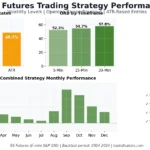
On the S&P 500, three months stand out as consistently strong: April, July, and November. All three close green 80% of the time over 20 years of data. The average gains are 2.11% for April, 2.27% for July, and 2.29% for November. Nothing else in the S&P comes close to those three months in terms of consistency and magnitude.
On the weak side, June and September are the standouts. September is the weakest month overall at -1.06% average. June is also negative, with only 40% of the time closing above where the month opened. Those are the two months where the data says to be cautious in the S&P.
Dow Jones: Same Strong Months, Different Weak Months
The Dow (using DIA) shows the same three strongest months: April, July, and November. April is slightly stronger in the Dow at 85% green rate, but July drops to 69.7% and November to 74.3%. The same relative outperformance is there compared to the other months, just with slightly less consistency than the S&P.
The weak months for the Dow are a bit different: January, June, and August. The weakness arrives a little sooner in the Dow (August vs. September in the S&P), and January gets added. June is the one weak month that overlaps across both the S&P and the Dow.
NASDAQ (QQQ): Confirming the Pattern
The QQQ shows the same three best months: April (2.02%), July (3.29%, the highest of any month across all three indexes), and November (2.19%). The frequency of green months is similar to the Dow.
The weak months for the NASDAQ are June (-0.8%), September (-0.6%), and December. June and September overlap with the S&P, while December is unique to the NASDAQ. The Dow had August as a weak month instead.
The Seasonality Cheat Sheet
Taking all of the data across the S&P, Dow, and NASDAQ, the simplified cheat sheet is:
Strong months: April, July, November. These are the months where all three index markets historically find buyers. 80% green rate in the S&P with average gains above 2%.
Weak months: June and September. June was the one constant across all three indexes. September stands out as one of the weakest months, especially in the S&P (-1.06%) and NASDAQ. These are the months to be cautious or reduce exposure.
You can run this same analysis on any market you trade using the free seasonal analysis indicator. Load it on your charts, adjust the lookback period, and build your own seasonality profile for the instruments you follow.
Frequently Asked Questions
What are the best months for the stock market?
April, July, and November are the strongest months across the S&P 500, Dow, and NASDAQ based on 20 years of data. All three close green 80% of the time in the S&P with average gains above 2%.
What are the worst months for the stock market?
June and September are the weakest months. September averages -1.06% in the S&P, and June is negative with only 40% green rate. June was the one weak month consistent across all three major indexes.
Do the same months perform well across all major indexes?
Yes. April, July, and November are the top three months in the S&P, Dow, and NASDAQ. The weak months differ slightly: September stands out in the S&P and NASDAQ, while the Dow has August as a weak month instead.
How much data does this analysis use?
20 years of historical data through the free seasonal analysis indicator, which shows the percentage of time each month closes above its open and the average gain or loss for each month.
Where can I download the seasonal analysis indicator?
The indicator is free for everyone at tosindicators.com/indicators. Load it on any chart in ThinkOrSwim to see month-by-month historical performance.


Ready to Trade With an Edge?
Join 40,000+ traders using institutional-grade tools for ThinkOrSwim.
Get the Bundle