
SPY Options DTE Comparison: 0 DTE vs 1 DTE vs 2 DTE for Day Trading
A data-driven comparison of SPY options at 0, 1, and 2 days to expiration. Analyze gamma exposure, theta decay curves, premium costs, and risk management rules to determine which DTE fits your day trading strategy.
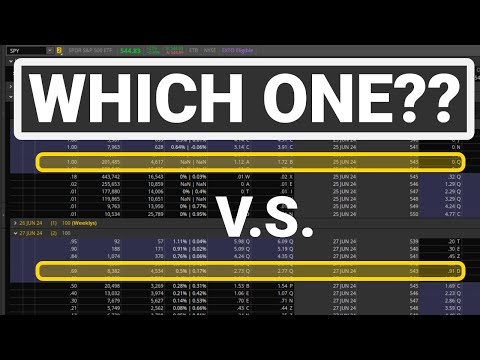
- SPY Options DTE Explained: Why Days to Expiration Drives Every Trade
- 0 DTE SPY Options: Maximum Gamma and Fastest Decay
- 1-2 DTE SPY Options: Time Value Buffer and Lower Gamma
- Side-by-Side DTE Comparison: Greeks, Cost, and Risk Profile
- Theta-Gamma Interaction: The Core DTE Tradeoff
- When to Use Each DTE: Strategy-Specific Selection
- How to Analyze Optimal DTE for Your Strategy
- ThinkScript DTE Filter for SPY Options Analysis
- S&P 500 Volatility Context and DTE Selection
- Risk Management Rules by DTE
- Resources for SPY Options DTE Analysis
SPY Options DTE Explained: Why Days to Expiration Drives Every Trade
DTE stands for Days to Expiration, measuring the calendar days remaining before an options contract expires worthless or settles at intrinsic value. SPY options with 0 DTE expire on the same trading day. Contracts with 1 or 2 DTE carry overnight exposure and additional time premium.
SPY options now offer daily expirations (Monday through Friday), giving traders granular DTE selection. The DTE you choose directly controls theta decay rate, gamma exposure, and total premium outlay. A 0 DTE ATM SPY call might cost $1.50, while the same strike at 2 DTE could run $3.00 or more.
Understanding how theta and gamma shift across 0, 1, and 2 DTE contracts is essential for SPY day traders. The SPX 0DTE options data breakdown shows how rapidly these dynamics change intraday.
0 DTE SPY Options: Maximum Gamma and Fastest Decay
0 DTE SPY options expire at the end of the current trading session. These contracts carry the highest gamma of any available expiration. ATM gamma on a 0 DTE SPY option can reach 0.08-0.12, compared to 0.03-0.05 on a 2 DTE contract.
High gamma means delta changes rapidly with each tick in SPY. A 0 DTE ATM call starting at 0.50 delta can swing to 0.80 delta after just a 1-point SPY move. This amplification effect creates explosive profit potential on directional trades that move quickly.
Theta decay on 0 DTE contracts accelerates exponentially after 12:00 PM ET. An ATM option losing $0.02 per hour at 10:00 AM may lose $0.10 per hour by 2:00 PM. By 3:30 PM, time decay becomes near-vertical, destroying remaining extrinsic value within minutes.
Traders using the Opening Range Breakout indicator often pair it with 0 DTE contracts because ORB signals fire early in the session when theta decay is still manageable and gamma provides maximum directional leverage.
1-2 DTE SPY Options: Time Value Buffer and Lower Gamma
SPY options with 1-2 DTE carry more extrinsic value, which acts as a buffer against adverse price moves. A 1 DTE ATM SPY call typically costs 40-60% more than its 0 DTE equivalent. This additional premium reflects overnight theta that has not yet decayed.
Gamma on 1-2 DTE contracts runs lower at 0.03-0.06 for ATM strikes. Delta changes are more gradual, meaning the option reacts more smoothly to SPY price movement. This makes entries more forgiving since a 0.50-point adverse move will not damage the position as severely.
Theta decay on 1 DTE options is significant but not catastrophic during a single session. A 1 DTE ATM option might lose 30-40% of its value across one trading day, compared to 80-100% for 0 DTE. This gives traders more time for their thesis to develop.
The Volatility Box provides key support and resistance levels that work well with 1-2 DTE setups. These levels give price targets where you can take profits before theta accelerates.
Side-by-Side DTE Comparison: Greeks, Cost, and Risk Profile
SPY ATM options exhibit dramatically different characteristics across DTE values. The following table compares typical Greeks and pricing for SPY trading near $590, using ATM call options at each DTE.
| Metric | 0 DTE | 1 DTE | 2 DTE |
|---|---|---|---|
| ATM Premium (approx.) | $1.20-$1.80 | $2.00-$2.80 | $2.80-$3.60 |
| Delta (ATM) | 0.50 | 0.50 | 0.50 |
| Gamma (ATM) | 0.08-0.12 | 0.05-0.07 | 0.03-0.05 |
| Theta (daily) | -$0.80 to -$1.50 | -$0.40 to -$0.70 | -$0.25 to -$0.45 |
| Vega | 0.02-0.04 | 0.05-0.08 | 0.08-0.12 |
| Intraday Decay Rate | Exponential (accelerates PM) | Moderate (steady) | Slow (minimal AM impact) |
| Breakeven Move Needed | $1.20-$1.80 in SPY | $2.00-$2.80 in SPY | $2.80-$3.60 in SPY |
| Best Entry Window | First 90 minutes | Any session time | Late session / overnight hold |
| Risk Level | Highest | Moderate | Lowest (for day trades) |
Delta starts at approximately 0.50 for all three DTEs when ATM. The critical difference is gamma, which determines how quickly delta shifts. Higher gamma in 0 DTE contracts means winning trades accelerate faster but losing trades deteriorate faster as well.
Vega is notably lower in 0 DTE options, meaning implied volatility changes have less impact on premium. For 2 DTE contracts, a 2-point IV spike can add $0.15-$0.25 to the option price. This makes longer-dated options more sensitive to volatility events like FOMC announcements or CPI releases.
Theta-Gamma Interaction: The Core DTE Tradeoff
Theta and gamma exist in a direct tradeoff at every DTE. High gamma (0 DTE) always comes packaged with high theta. The options pricing model ensures that the leverage benefit of gamma is offset by time decay cost. No free lunch exists in this relationship.
At 0 DTE, gamma dominates in the morning session. A 1-point SPY move generates $0.08-$0.12 of delta change, which on a 100-share-equivalent contract means the option accelerates directionally. Theta is present but slower before noon. After 1:00 PM ET, theta begins to dominate as the exponential decay curve steepens.
For 2 DTE contracts, theta is relatively flat throughout a single trading session. Gamma provides modest acceleration on directional moves, but the option behaves more like a stock proxy with leverage. This predictable behavior makes 2 DTE options easier to manage with technical analysis tools like the Supply & Demand Edge indicator.
The Cumulative TICK indicator helps traders identify intraday momentum shifts that align with the gamma-theta dynamic. Strong TICK readings favor 0 DTE entries where gamma can amplify gains before theta accelerates.
When to Use Each DTE: Strategy-Specific Selection
Different trading strategies demand different DTE selections. Directional momentum trades benefit most from 0 DTE options. Credit spreads and hedging strategies often perform better with 1-2 DTE contracts. Matching DTE to strategy is critical for consistent results.
Directional Momentum Trades
0 DTE options are optimal for high-conviction directional trades with defined catalysts. Opening range breakouts, VWAP reclaims, and gap-fill setups all benefit from maximum gamma exposure. Enter within the first 90 minutes and target 50-100% gains. Exit before 1:00 PM ET if the trade has not reached target.
Credit Spreads
0 DTE credit spreads collect premium that decays rapidly. A 0 DTE SPY bull put spread placed at 9:45 AM can capture 40-60% of max profit by 2:00 PM if SPY holds support. However, 1 DTE credit spreads offer a better risk-reward ratio because sudden intraday reversals are less catastrophic with more time value remaining.
Hedging and Portfolio Protection
2 DTE SPY puts provide more reliable portfolio hedges. The lower gamma means the hedge value changes smoothly with SPY price movement. Overnight exposure is included, protecting against gap-down events. The Futures Volatility Box can identify key overnight levels where hedges become most valuable.
Scalping and Quick Trades
For sub-30-minute scalps, 0 DTE options deliver the highest percentage returns per SPY point of movement. Gamma amplification turns a 0.50-point SPY move into a 15-25% option price change. Theta impact is negligible over such short holding periods, making 0 DTE ideal for scalpers.
How to Analyze Optimal DTE for Your Strategy
Selecting the right DTE requires analyzing three variables: expected holding period, SPY's current volatility regime, and your directional conviction level. Each variable narrows the optimal DTE window.
Start with your expected holding period. If you plan to hold for under 60 minutes, 0 DTE provides the best gamma-to-theta ratio. For holds of 2-4 hours, 1 DTE balances gamma exposure with manageable decay. Overnight positions need 2+ DTE minimum.
Next, assess the volatility environment. When VIX is elevated above 20, 0 DTE premiums are inflated, which increases the breakeven distance. In high-VIX environments, 1-2 DTE options may offer better value because their extra time premium is proportionally smaller relative to the elevated IV.
Finally, evaluate conviction level. High-conviction setups (strong technical confluence, supportive market internals from the Cumulative TICK) warrant 0 DTE for maximum leverage. Lower-conviction trades should use 1-2 DTE for error margin.
ThinkScript DTE Filter for SPY Options Analysis
The following ThinkScript code creates a DTE filter that displays the current DTE for any SPY options contract loaded in thinkorswim. It also calculates the approximate theta-gamma ratio to help identify the optimal entry window.
# SPY Options DTE Filter
# Displays DTE and Theta-Gamma Ratio for trade timing

declare lower;

def dte = GetDaysToExpiration();
def currentTheta = Theta();
def currentGamma = Gamma();
def thetaGammaRatio = if currentGamma != 0 then AbsValue(currentTheta) / currentGamma else 0;

# DTE Category Labels
AddLabel(yes, "DTE: " + dte,
    if dte == 0 then Color.RED
    else if dte == 1 then Color.YELLOW
    else Color.GREEN);

AddLabel(yes, "Theta: " + Round(currentTheta, 4), Color.ORANGE);
AddLabel(yes, "Gamma: " + Round(currentGamma, 4), Color.CYAN);
AddLabel(yes, "T/G Ratio: " + Round(thetaGammaRatio, 2),
    if thetaGammaRatio > 15 then Color.RED
    else if thetaGammaRatio > 8 then Color.YELLOW
    else Color.GREEN);

# Plot DTE as histogram
plot DTEPlot = dte;
DTEPlot.SetPaintingStrategy(PaintingStrategy.HISTOGRAM);
DTEPlot.AssignValueColor(
    if dte == 0 then Color.RED
    else if dte == 1 then Color.YELLOW
    else Color.GREEN);

# Theta decay acceleration warning
plot ThetaWarning = if dte == 0 and SecondsFromTime(1200) > 0 then 1 else 0;
ThetaWarning.SetPaintingStrategy(PaintingStrategy.BOOLEAN_ARROW_DOWN);
ThetaWarning.SetDefaultColor(Color.RED);
ThetaWarning.SetLineWeight(3);
This script assigns color-coded labels: red for 0 DTE (highest risk), yellow for 1 DTE, and green for 2+ DTE. The theta-gamma ratio label turns red when theta decay dominates gamma benefit, signaling that new entries carry elevated time decay risk.
The ThetaWarning plot displays a red arrow after 12:00 PM ET on 0 DTE contracts, reminding traders that exponential theta decay has begun. This visual cue helps prevent late-session entries on same-day expiration options.
S&P 500 Volatility Context and DTE Selection
SPY options pricing is directly tied to S&P 500 implied volatility as measured by the VIX. The video analysis shows how SPY volatility levels during the comparison period directly affected the performance gap between 0 DTE and 2 DTE contracts.
In low-volatility environments (VIX below 15), 0 DTE options are cheaper in absolute terms. The reduced premium means less capital at risk, but the breakeven move is still proportionally challenging. Low VIX also compresses intraday ranges, making it harder for 0 DTE directional trades to reach profitability before theta accelerates.
In elevated volatility (VIX above 20), 0 DTE premiums expand significantly. A 0 DTE ATM SPY call might cost $2.50-$3.50 instead of the typical $1.20-$1.80. The higher cost increases breakeven distance, but expanded intraday ranges provide more movement to capture. The 2 DTE results from the comparison showed more consistent returns in volatile conditions.
Risk Management Rules by DTE
Each DTE category demands specific risk management parameters. Using the same stop-loss rules across all DTEs is a common mistake that leads to premature exits on longer-dated options or catastrophic losses on 0 DTE contracts.
| Risk Parameter | 0 DTE Rule | 1 DTE Rule | 2 DTE Rule |
|---|---|---|---|
| Max Position Size | 1-2% of account | 2-3% of account | 3-5% of account |
| Stop Loss (% of premium) | 30-50% | 25-40% | 20-35% |
| Profit Target | 50-100% | 30-60% | 20-40% |
| Max Holding Time | 2-3 hours | Full session | 1-2 sessions |
| Exit if Flat By | 12:00 PM ET | 2:00 PM ET | End of Day 1 |
| Spread Width (if using spreads) | $1-$2 wide | $2-$3 wide | $3-$5 wide |
Position sizing is tighter for 0 DTE because the probability of a total loss is materially higher. A 0 DTE option can go from $1.50 to $0.05 in under two hours during a sideways session. Limiting exposure to 1-2% of account value ensures that any single 0 DTE loss does not meaningfully impact overall capital.
Resources for SPY Options DTE Analysis




Ready to Trade With an Edge?
Join 40,000+ traders using institutional-grade tools for ThinkOrSwim.
Get the Bundle