
 Fair Value Gap
 False Breakout Scanner
 Heiken Ashi Trend
 Stock Volatility Box
 Futures Volatility Box
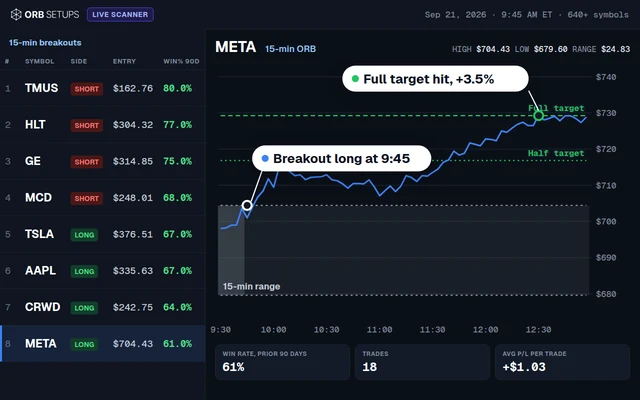 ORB Setups
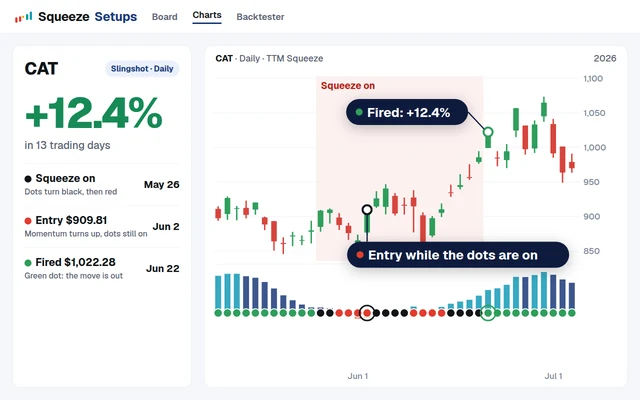 Squeeze Setups
What Is a False Breakout?
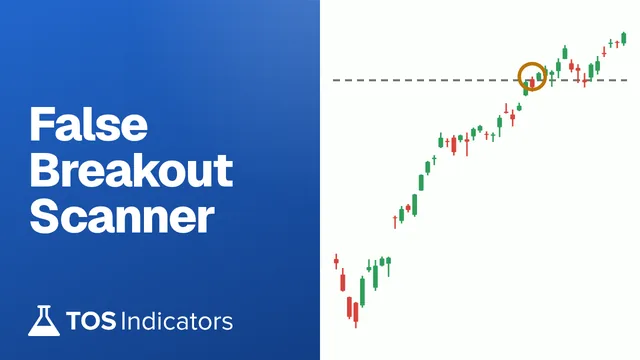
A false breakout occurs when price moves beyond a defined support or resistance level but fails to sustain momentum in the breakout direction. Instead of continuing, price reverses sharply back into the prior range. Traders who entered on the breakout are trapped, and their forced exits accelerate the reversal.
False breakouts are also called fakeouts, failed breakouts, or bull/bear traps depending on the direction. A bull trap is a false breakout above resistance that reverses lower. A bear trap is a false breakout below support that reverses higher. Both follow the same mechanics: an initial push beyond a key level followed by a failure to hold.
Anatomy of a False Breakout
Every false breakout follows a predictable sequence. First, price approaches a clearly defined level that many traders are watching. Second, price pushes through the level, triggering breakout entries and stop-loss orders. Third, the move stalls as buying or selling pressure dries up. Fourth, price reverses back through the level as trapped traders exit.
The reversal phase is often more aggressive than the initial breakout. Trapped longs become forced sellers, and sidelined traders see an opportunity to fade the move. This creates a cascading effect where the failure itself generates the momentum for the reversal.
Why False Breakouts Happen
False breakouts are not accidents. They result from specific market dynamics involving order flow, liquidity, and the behavior of different market participants. Understanding why they occur gives traders the ability to anticipate and avoid them, or even profit from them.
Stop Runs and Liquidity Hunts
The most common cause of false breakouts is the stop run. Clusters of stop-loss orders sit just beyond obvious support and resistance levels. Market makers and institutional traders know where these stops are concentrated. A brief push through the level triggers those stops, providing liquidity for large orders to be filled at favorable prices.
Once the stops have been cleared and the institutional orders filled, there is no remaining demand to sustain the breakout. Price reverses as the artificial buying or selling pressure evaporates. This is why breakouts at obvious, well-watched levels fail at such a high rate.
Institutional Traps
Large institutions cannot enter or exit positions all at once without moving the market against themselves. They need liquidity, meaning they need retail traders on the other side of their orders. A false breakout creates that liquidity by triggering a wave of retail entries and stop triggers.
When price breaks above resistance, retail traders buy the breakout. That collective buying provides the liquidity for an institution to sell into strength. Once the institution has filled its order, the buying pressure disappears and price drops back below resistance. The retail traders who bought the breakout become bag holders.
Low-Volume Moves
Breakouts that occur on below-average volume are far more likely to fail. Volume represents conviction. When price pushes through a level without a corresponding increase in volume, it means few participants are backing the move. There is no genuine demand or supply to sustain the new price level.
Low-volume breakouts are particularly common during midday trading sessions, pre-market hours, and holiday-shortened weeks. The thinner the liquidity, the easier it is for price to briefly push through a level before snapping back. Always compare breakout volume to the 20-period average volume before committing to a trade.
The 3 Most Common False Breakout Patterns
False breakouts come in several recognizable forms. Learning to identify these patterns in real time allows traders to avoid traps and, in many cases, trade the reversal for profit. These three patterns account for the majority of false breakouts across stocks, futures, and options.
Pattern 1: Failed Highs and Failed Lows
A failed high occurs when price breaks above a prior swing high or resistance level but closes back below it on the same bar or the next bar. The wick above the level is the trap. Traders who bought the breakout are immediately underwater, and their stops fuel the reversal.
Failed lows are the mirror image. Price briefly dips below a swing low or support level, triggers stops, and then reverses higher. These patterns are especially common at daily chart swing points where a large number of traders have their stops positioned. Watch for long upper wicks at resistance or long lower wicks at support as the visual signature of this pattern.
| Pattern | Setup | Trap Signal | Trade Direction |
|---|---|---|---|
| Failed High (Bull Trap) | Price breaks above resistance | Closes back below resistance | Short or exit long |
| Failed Low (Bear Trap) | Price breaks below support | Closes back above support | Long or exit short |
| Range Trap | Price breaks outside a range | Reverses back inside range | Fade back to midrange |
| Channel Fakeout | Price breaks outside a channel | Re-enters channel on next bar | Fade toward opposite channel boundary |
Pattern 2: Range Traps
When price consolidates inside a well-defined range, traders watch for a breakout in either direction to signal the next move. Range traps occur when price breaks above or below the range but fails to sustain the move, reversing back into the consolidation. These are among the most frustrating false breakouts because traders have been patiently waiting for the range to resolve.
Range traps happen most often when the range has been in place for an extended period and many traders have identified the same boundaries. The obvious nature of the range means there is a large pool of stop orders just outside both edges. A sweep of those stops can occur without any genuine change in market bias. The Multi-Timeframe Squeeze indicator helps identify when a range is truly coiling for a breakout versus when it is likely to produce another false move.
Pattern 3: Channel Fakeouts
Channels are sloped ranges defined by parallel trendlines. Channel fakeouts occur when price briefly breaks above the upper channel line or below the lower channel line and then reverses back inside. These are particularly deceptive because the breakout appears to signal a trend acceleration.
Channel fakeouts are common near the end of a trend when momentum is weakening. The final push beyond the channel boundary is often a climactic move driven by late entrants. When the buying or selling exhaustion kicks in, price snaps back inside the channel and often accelerates toward the opposite boundary. The Stacked Moving Averages indicator can help confirm whether the trend is still healthy or showing signs of exhaustion before a potential fakeout.
Volume Confirmation: Real Breakouts vs. False Ones
Volume is the single most reliable tool for distinguishing real breakouts from false ones. A real breakout is accompanied by a significant increase in volume because genuine institutional participation drives the move. A false breakout typically occurs on average or below-average volume because it is driven by stop triggers rather than new conviction.
What Real Breakout Volume Looks Like
On a real breakout, the breakout candle prints at least 1.5x to 2x the average volume. The follow-through candles also show elevated volume, confirming that new buyers or sellers are entering. The volume pattern is sustained, not a single spike followed by silence.
Compare the breakout candle's volume to the 20-period simple moving average of volume. If the breakout bar is 50% or more above the average, it passes the first filter. Then check whether the next two to three bars maintain above-average volume. If volume fades immediately after the breakout candle, treat the move with suspicion.
Volume Signatures of False Breakouts
False breakouts show a distinctive volume pattern. The breakout candle may have a brief volume spike caused by stop triggers, but it is not sustained. The next bar shows volume dropping back to or below average. This tells you the move was driven by mechanical order flow (stops being hit) rather than genuine new interest.
Another warning sign is high volume on the reversal candle. When the candle that reverses back through the breakout level prints higher volume than the breakout candle itself, it confirms that the breakout has failed and the reversal is the real move.
The Breakout-Retest Method
The breakout-retest method is the most conservative and reliable approach to trading breakouts. Instead of entering immediately when price breaks through a level, you wait for price to pull back and retest the broken level from the other side. This single adjustment filters out the majority of false breakouts.
How the Retest Works
After a genuine breakout above resistance, the broken resistance level becomes new support. Price often pulls back to test this new support level before continuing higher. If the retest holds, it confirms the breakout was real and provides a lower-risk entry point with a clearly defined stop.
The retest gives you three advantages. First, it confirms that the breakout was genuine rather than a stop run. Second, it provides a tighter stop-loss level (just below the retested level) rather than the wider stop required on the initial breakout. Third, it improves the risk-reward ratio because your entry is closer to the invalidation point.
Retest Entry Rules
Wait for price to break above resistance (or below support) with above-average volume. Then wait for a pullback to the broken level. Enter when price shows a rejection candle at the retested level, such as a pin bar, engulfing candle, or a candle with a long wick touching the level and closing in the breakout direction.
Place your stop just beyond the retested level. For a breakout above resistance, the stop goes below the retested resistance-turned-support. This gives the trade a tight risk with a target at the next resistance level above. The typical risk-reward ratio on a retest entry is 2:1 to 3:1.
When the Retest Fails
If price retests the broken level and breaks back through it, the breakout has failed. This is a powerful signal to trade the reversal. The failed retest tells you that the breakout did not have enough conviction to hold, and the trapped breakout traders are now fueling the reversal. This scenario is one of the highest-probability false breakout fade setups available.
TTM Squeeze as a Breakout Filter
The TTM Squeeze indicator measures the relationship between Bollinger Bands and Keltner Channels. When the Bollinger Bands contract inside the Keltner Channels, a "squeeze" is on. When the Bollinger Bands expand back outside the Keltner Channels, the squeeze "fires." This squeeze fire is a powerful breakout filter.
Why Squeeze Fires Produce Better Breakouts
A squeeze represents genuine volatility compression. Price is coiling as buyers and sellers reach a temporary equilibrium. When the squeeze fires, it signals that the compression is resolving into a directional move. Breakouts that coincide with squeeze fires are backed by real volatility expansion, not just a stop run past a level.
Breakouts without a squeeze are more likely to be noise. If price breaks above resistance but the TTM Squeeze shows no compression and no fire, the breakout lacks the volatility expansion that drives sustained moves. The Multi-Timeframe Squeeze adds an additional layer of confirmation by requiring squeeze alignment across multiple timeframes.
Combining Squeeze with Breakout Levels
The highest-probability breakout trades occur when a squeeze fires at the same time price breaks through a defined support or resistance level. The squeeze confirms that volatility is genuinely expanding, while the level break confirms that price has chosen a direction.
Filter your breakout setups by only taking trades where the TTM Squeeze has been on (dots are red) and fires (dots turn green) within two bars of the price breakout. This eliminates the majority of false breakouts because you are requiring two independent confirmations: level break and volatility expansion.
ThinkScript: False Breakout Detection Filter
This ThinkScript code detects potential false breakout conditions on ThinkOrSwim charts. It identifies when price breaks above a recent high or below a recent low and then reverses back, flagging the candle where the false breakout is confirmed. It also includes a volume filter to highlight low-conviction breakouts.
# False Breakout Detection Filter
# Identifies failed breakouts with volume confirmation
# Apply to any timeframe chart in ThinkOrSwim

input lookbackPeriod = 20;
input volumeAvgLength = 20;
input volumeThreshold = 1.0; # Breakout volume must exceed this multiple of avg

# Define recent swing high and low
def swingHigh = Highest(high, lookbackPeriod);
def swingLow = Lowest(low, lookbackPeriod);

# Average volume baseline
def avgVolume = Average(volume, volumeAvgLength);

# Detect breakout above swing high
def brokeAbove = high > swingHigh[1];
def closedBelow = close < swingHigh[1];

# Detect breakout below swing low
def brokeBelow = low < swingLow[1];
def closedAbove = close > swingLow[1];

# Volume check: was breakout on low volume?
def lowVolBreakout = volume < avgVolume * volumeThreshold;

# False breakout signals
def falseBreakoutUp = brokeAbove and closedBelow;
def falseBreakoutDown = brokeBelow and closedAbove;

# Plot arrows for false breakouts
plot FalseBullTrap = if falseBreakoutUp then high else Double.NaN;
FalseBullTrap.SetPaintingStrategy(PaintingStrategy.ARROW_DOWN);
FalseBullTrap.SetDefaultColor(Color.RED);
FalseBullTrap.SetLineWeight(3);

plot FalseBearTrap = if falseBreakoutDown then low else Double.NaN;
FalseBearTrap.SetPaintingStrategy(PaintingStrategy.ARROW_UP);
FalseBearTrap.SetDefaultColor(Color.GREEN);
FalseBearTrap.SetLineWeight(3);

# Low volume breakout warning
plot LowVolWarning = if (brokeAbove or brokeBelow) and lowVolBreakout
                     then close else Double.NaN;
LowVolWarning.SetPaintingStrategy(PaintingStrategy.BOOLEAN_WEDGE_UP);
LowVolWarning.SetDefaultColor(Color.YELLOW);

# Alert conditions
Alert(falseBreakoutUp, "False Bull Trap Detected", Alert.BAR, Sound.Bell);
Alert(falseBreakoutDown, "False Bear Trap Detected", Alert.BAR, Sound.Bell);
How to Use This Script
Add this indicator to any ThinkOrSwim chart. Red down arrows mark false bull traps where price broke above a swing high but closed back below. Green up arrows mark false bear traps where price broke below a swing low but reversed higher. Yellow wedges flag any breakout that occurred on below-average volume, warning you before the false breakout is confirmed.
Adjust the lookbackPeriod to change the sensitivity. A shorter lookback (10-15 bars) detects minor false breakouts at short-term levels. A longer lookback (30-50 bars) focuses on more significant levels where the false breakout carries more reversal potential. The volumeThreshold input lets you define what counts as "low volume" relative to the average.
# Breakout Quality Scanner for Stock Hacker
# Finds stocks where a breakout just occurred with volume confirmation
# Use to filter HIGH-QUALITY breakouts and avoid false ones

input period = 20;
input volMultiplier = 1.5;

def hh = Highest(high[1], period);
def ll = Lowest(low[1], period);
def avgVol = Average(volume[1], period);

# Bullish breakout with volume confirmation
def qualityBreakout = close > hh
                      and volume > avgVol * volMultiplier
                      and close > open;

# Bearish breakout with volume confirmation
def qualityBreakdown = close < ll
                       and volume > avgVol * volMultiplier
                       and close < open;

plot scan = qualityBreakout or qualityBreakdown;
This companion scanner runs in ThinkOrSwim's Stock Hacker. It identifies stocks that just produced a high-quality breakout backed by volume. By comparing the output of this scanner with the false breakout indicator on your chart, you can quickly separate genuine opportunities from traps.
False Breakout Fade Strategy
Instead of just avoiding false breakouts, experienced traders actively trade the reversal. The false breakout fade is a mean-reversion strategy that enters in the opposite direction of the failed breakout. It works because the trapped breakout traders provide the fuel for the reversal move.
Fade Entry Rules
Wait for a confirmed false breakout: price breaks above resistance (or below support) and then closes back inside the range on the same bar or the following bar. Enter in the reversal direction as the confirmation candle closes. For a bull trap fade, enter short when price closes back below the broken resistance. For a bear trap fade, enter long when price closes back above support.
Require at least one of these confirmation signals before fading: the breakout candle has below-average volume, the reversal candle has higher volume than the breakout candle, or the breakout showed a long wick beyond the level with a close back inside the range. The strongest fade setups have all three confirmations present.
Fade Stop Placement
Place the stop just beyond the extreme of the false breakout. For a bull trap fade (short entry), the stop goes above the high of the breakout candle. For a bear trap fade (long entry), the stop goes below the low of the breakout candle. This is typically a tight stop because the false breakout wick defines the maximum risk.
Never use a wide stop on a fade trade. The entire premise of the trade is that the breakout level will hold. If price pushes back through the level again and threatens your stop, the thesis is invalidated. Accept the small loss and move on. Fade trades should have a risk-reward ratio of at least 2:1 to account for the directional uncertainty inherent in counter-trend entries.
Fade Targets
The first target is the midpoint of the prior range. If price was consolidating between $100 support and $105 resistance and a bull trap formed at $105, the first target for the short fade is $102.50. The second target is the opposite boundary of the range at $100. These are conservative targets that account for the fact that the range may continue to hold.
For fade trades that coincide with a trend reversal signal, the target can extend beyond the range. If a false breakout above resistance aligns with bearish divergence on momentum indicators, the trade may have legs beyond the initial range target. Use the Stock Volatility Box to identify extended target levels based on expected daily ranges.
Risk Management for Breakout Trades
Whether you are trading breakouts or fading false breakouts, risk management is the difference between a viable strategy and a blown account. Breakout trading produces a specific risk profile: moderate win rates with larger winners than losers. Fade trading produces higher win rates with smaller individual gains. Both require position sizing discipline.
Position Sizing Rules
Risk no more than 1-2% of your trading account on any single breakout trade. Calculate position size based on the distance from your entry to your stop-loss, not on how much stock you want to own. If your stop is $2 away from your entry and you can risk $500 on the trade, your position size is 250 shares. No exceptions.
For false breakout fades, the stop is typically tighter, which means you can take a slightly larger position size while keeping the dollar risk the same. However, resist the temptation to size up aggressively. Fade trades can chain into multiple consecutive losses during strong trending markets where breakouts are genuine and your fades keep getting stopped out.
| Risk Parameter | Breakout Trades | False Breakout Fades |
|---|---|---|
| Max risk per trade | 1-2% of account | 1-2% of account |
| Typical stop distance | Below range low (wide) | Beyond breakout wick (tight) |
| Win rate expectation | 40-55% | 55-65% |
| Risk-reward target | 2:1 to 3:1 | 2:1 to 2.5:1 |
| Best market conditions | Trending, high volume | Range-bound, choppy |
| Worst conditions | Range-bound, low volume | Strong trend days |
Avoiding Revenge Trading After a False Breakout
Getting trapped in a false breakout is emotionally frustrating. The natural impulse is to immediately reverse the position or take another trade to recover the loss. This revenge trading almost always makes the situation worse. After a false breakout stop-out, step away from the chart for at least 15 minutes before considering another entry.
Have a maximum daily loss limit in place before you start trading. If false breakouts have cost you your daily limit, stop trading for the day. The market will be there tomorrow. The traders who survive long-term are the ones who protect their capital during difficult sessions, not the ones who fight the market until they win.
Using Multiple Timeframe Confirmation
One of the most effective ways to reduce false breakout exposure is to confirm breakouts across multiple timeframes. A breakout on the 5-minute chart that is confirmed by the 15-minute or 60-minute chart is significantly more reliable than a single-timeframe signal.
Check the higher timeframe trend before trading any breakout. If the 5-minute chart shows a breakout above resistance but the 60-minute chart shows price at the top of a downtrend channel, the breakout is fighting the larger trend and is more likely to fail. Use the Stacked Moving Averages indicator to quickly assess trend alignment across timeframes. The Futures Volatility Box provides daily expected range levels that serve as natural confirmation or rejection points for intraday breakouts.
Common Mistakes When Trading Breakouts
Most traders lose money on breakouts not because breakout trading is inherently flawed, but because they make the same avoidable mistakes repeatedly. Recognizing these errors in your own trading is the first step toward filtering false breakouts from your results.
Chasing Extended Breakouts
Entering a breakout after price has already moved significantly beyond the level is the most common error. The further price has traveled from the breakout point, the worse your risk-reward ratio becomes and the more likely a pullback becomes. If you missed the initial breakout, wait for the retest. Do not chase.
Ignoring the Broader Context
A breakout above resistance on a 5-minute chart means little if the daily chart is in a clear downtrend. Always check the higher timeframe context before trading a breakout. The best breakouts align with the dominant trend direction on at least two timeframes. Counter-trend breakouts carry a much higher failure rate and should only be taken with extra confirmation.
Using Fixed Stop Distances
Setting a stop at an arbitrary distance (like 2% below entry) rather than at a logical chart level is a recipe for getting stopped out by normal price noise. Place stops based on the chart structure: below the range low for a long breakout, above the range high for a short breakout. Let the chart tell you where your stop should go, not a fixed percentage.
Overtrading Breakout Setups
Not every level break is a tradeable breakout. High-quality breakout setups require confluence: a clear level, volume confirmation, squeeze conditions, and trend alignment. If you are taking multiple breakout trades per session, you are likely forcing setups that do not meet your criteria. Quality over quantity is the fundamental rule of breakout trading. Tools like the MA Crossover Backtester can help you evaluate whether your specific breakout criteria produce a positive expectancy over a large sample.
Putting It All Together: The Breakout Checklist
Before entering any breakout trade, run through this checklist. Each item adds a layer of confirmation that separates real breakouts from false ones. The more boxes you check, the higher the probability that the breakout is genuine.
| Checklist Item | What to Look For | If Missing |
|---|---|---|
| Clear level definition | Level tested 2-3 times with clear bounces | Skip the trade |
| Volume confirmation | Breakout bar volume 1.5x+ average | Wait for retest |
| Squeeze condition | TTM Squeeze fired within 2 bars | Reduce position size |
| Trend alignment | Higher timeframe supports direction | Treat as counter-trend (smaller size) |
| Candle close | Bar closes beyond the level (not just wick) | Wait for close confirmation |
| Follow-through | Next bar holds above level | Tighten stop to breakeven |
This checklist is not about requiring perfection. Some of the best breakout trades will only check four or five boxes. But a breakout that checks only one or two should be avoided entirely. The checklist forces discipline and prevents impulsive entries at levels where the probability of a false breakout is high.
Tools for Filtering Breakouts
The following tools provide breakout detection, volatility analysis, and confirmation signals that help traders avoid false breakouts and identify high-quality setups on ThinkOrSwim.
Frequently Asked Questions
What percentage of breakouts are false breakouts?
Estimates vary by market and timeframe, but studies and trader observations consistently place the false breakout rate between 50% and 70%. This means the majority of breakouts at obvious support and resistance levels fail to produce sustained moves. The exact rate depends on the quality of the level, the volume behind the breakout, and the broader market conditions. Well-filtered breakouts with volume confirmation and squeeze alignment have a significantly lower false breakout rate, closer to 30-40%.
How do you confirm a breakout is real?
The most reliable confirmation comes from three factors. First, volume on the breakout candle should be at least 1.5 times the 20-period average volume. Second, the candle should close beyond the level, not just wick through it. Third, the next bar should hold above the broken level rather than immediately reversing back. The breakout-retest method adds a fourth layer of confirmation by waiting for a pullback to the broken level that holds. All of these filters reduce false breakout exposure at the cost of sometimes missing fast-moving breakouts.
What is the best indicator to filter false breakouts?
The TTM Squeeze is the most effective single indicator for filtering false breakouts. A breakout that coincides with a squeeze fire (Bollinger Bands expanding outside Keltner Channels) is backed by genuine volatility expansion. Breakouts without a squeeze fire are more likely to be noise or stop runs. The Multi-Timeframe Squeeze is even more powerful because it requires squeeze alignment across multiple timeframes, further reducing false signals.
Should you trade the false breakout reversal?
Yes, but with strict rules. The false breakout fade is a high-probability trade when executed with discipline. Wait for the breakout to fail (price closes back inside the range), enter in the reversal direction, place a tight stop beyond the breakout extreme, and target the midpoint of the range. The edge comes from trapped traders exiting their positions and fueling the reversal. However, fading breakouts during strong trend days is dangerous. Only fade when the market is range-bound or when the breakout is against the dominant higher-timeframe trend.
Do false breakouts happen more in certain market conditions?
False breakouts are significantly more common in range-bound, low-volatility, and low-volume environments. Midday trading sessions, summer months, and pre-holiday periods produce more false breakouts because there is not enough participation to sustain a move beyond a key level. Conversely, breakouts that occur during the first hour of trading, on high-volume days, or following major catalysts (earnings, economic data) are more likely to be genuine. Understanding the current volatility regime helps traders calibrate their expectations about breakout reliability.
 Parabolic SAR Indicator, Scans and Backtester for ThinkOrSwim
 Simple Breakout Tool Scans
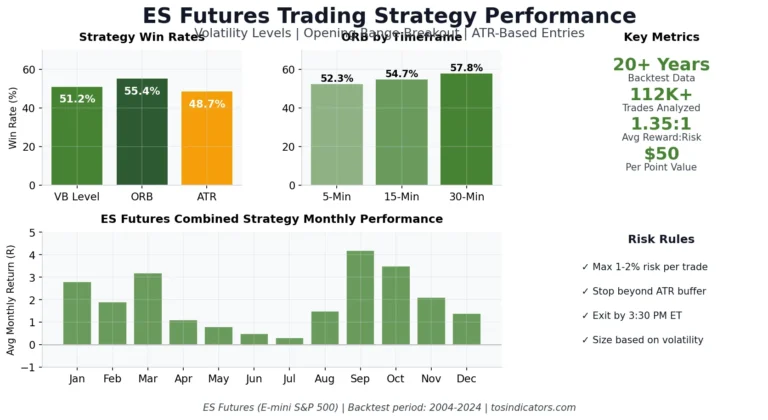 ES Futures Trading Strategy: Volatility Levels, ORB, and ATR-Based Entries
 Three Powerful Setups to Day Trade NASDAQ
 SPX 0DTE Options: Data Breakdown for Day Traders
 Opening Range Breakout (ORB) Strategy Backtest: SPY vs AAPL Results