
 Fair Value Gap
 False Breakout Scanner
 Heiken Ashi Trend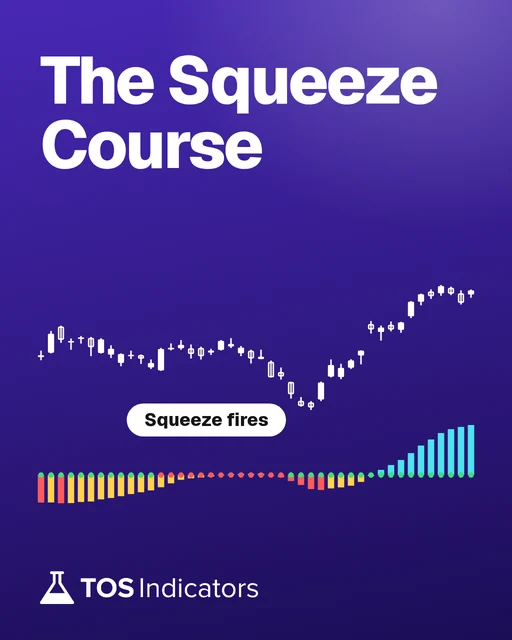
 Stock Volatility Box
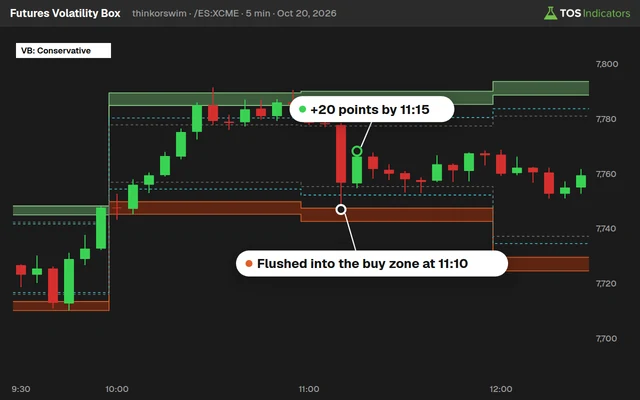 Futures Volatility Box
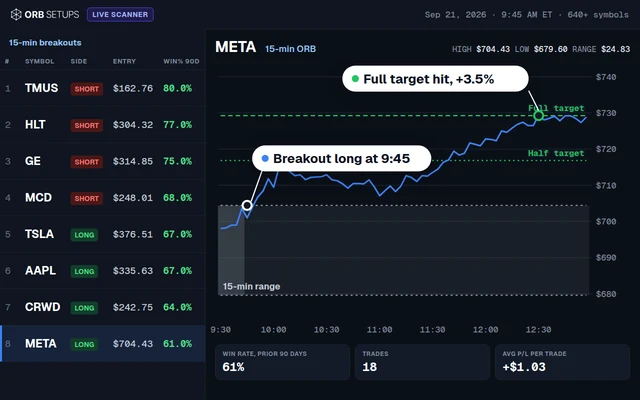 ORB Setups
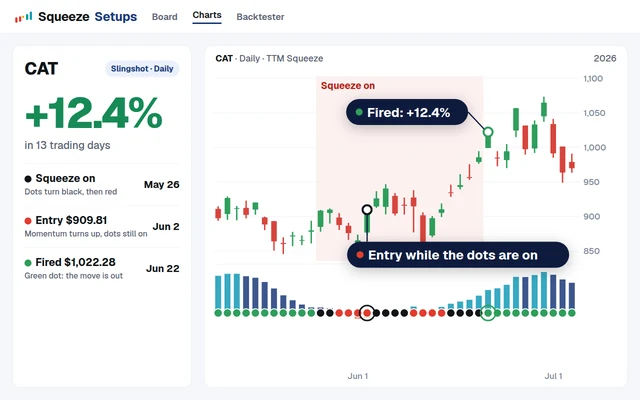 Squeeze Setups
The Core Question
Every trader using ThinkOrSwim indicators eventually reaches the same fork: trade shorter timeframes with more opportunities and more noise, or move up to higher timeframes with fewer trades but cleaner signals. The answer depends on your trading style, but the underlying mechanics are worth understanding.
Why Higher Timeframes Reduce Noise
Each candle on a higher timeframe contains more price data. A daily candle holds roughly 390 one-minute candles. When a TTM Squeeze fires on a daily chart, it reflects compression and expansion of the full day's range, not a brief intraday blip. A 20-period moving average on a daily chart covers 20 trading days. The same average on a 1-minute chart covers just 20 minutes, which carries almost no trend information.
RSI behaves the same way. A 14-period RSI on a 1-minute chart measures momentum over 14 minutes, barely enough time for a single institutional order to fill. A 14-period RSI on a daily chart covers roughly three trading weeks, giving a more meaningful picture of buying and selling pressure.
The result: indicators on higher timeframes tend to produce fewer signals, but those signals carry more weight because they reflect larger, more sustained price moves rather than intraday noise.
The Tradeoff
Higher timeframes reduce false signals but also reduce total opportunities and increase the capital required per trade (wider stop losses). A daily TTM Squeeze on SPY might fire only a handful of times per year. If you need frequent activity, you have to find a balance between signal quality and quantity.
Shorter timeframes give you precise entry timing within a larger move, the ability to manage risk with tighter stops, and the chance to capture intraday moves invisible on daily charts. The tradeoff is more noise, more commissions, and more psychological fatigue from frequent decision-making.
The Multi-Timeframe Solution
The practical middle ground: use multiple timeframes together. Use a higher timeframe to establish direction and a lower timeframe to time entries. If the daily chart shows a TTM Squeeze firing long, drop to a shorter timeframe and wait for a corresponding entry signal. This approach filters out trades that conflict with the higher timeframe trend while still allowing precise entry timing.
Three timeframes is the practical maximum. Using more creates analysis paralysis because they rarely all agree simultaneously. The typical structure: a primary (trading) timeframe, one higher (trend) timeframe, and one lower (entry) timeframe.
Practical Guidelines by Trading Style
Scalpers (1-min to 5-min): Accept the higher noise level and compensate with strict risk management. Use the Volatility Box to filter out low-volatility periods where false signals tend to spike.
Day Traders (5-min to 15-min): The 15-minute chart is a common sweet spot for intraday trading. It reduces noise compared to the 1-minute chart while still providing enough signals for an active session. This is where ThinkOrSwim indicators like the squeeze and Market Pulse tend to produce the most actionable results.
Swing Traders (1-hour to daily): Higher win rates and cleaner signals come at this level. Use the daily chart for direction and the 1-hour chart for entries. The TTM Squeeze on the daily chart tends to produce the cleanest signals because each squeeze represents compression of a full day's price range.
Common Multi-Timeframe Mistakes
Overriding the higher timeframe. If the daily chart shows bearish and the 5-minute shows bullish, many traders take the 5-minute signal. Trading against the higher timeframe direction increases the probability of a false signal.
Using too many timeframes. Five or six timeframes almost never all agree. Stick to three: trend, trading, and entry.
Not adjusting position size. A daily chart trade on SPY might need a wider stop than a 5-minute trade. Always calculate position size based on dollar risk, not share count.
Frequently Asked Questions
Do larger timeframes always reduce false signals?
In general, yes. Higher timeframes contain more price data per candle, making indicator readings more stable. The improvement is most noticeable between the 1-minute and 15-minute timeframes, with diminishing returns after that.
What is the best timeframe for the TTM Squeeze?
The daily chart produces the cleanest TTM Squeeze signals because each squeeze represents compression of a full day's range. For active day traders, the 15-minute chart is a common choice that balances signal quality with frequency.
How does multi-timeframe analysis improve results?
It filters out trades that conflict with the higher timeframe trend. When a signal on your trading timeframe aligns with the direction of the higher timeframe, the probability of a successful trade increases.
Should I stop trading shorter timeframes?
No. Shorter timeframes are useful for precise entry timing, tighter risk management, and capturing intraday moves. The best approach uses shorter timeframes for entries within the context of a higher timeframe trend direction.
How many timeframes should I use?
Three is the practical maximum: a trend timeframe (higher), a trading timeframe (primary), and an entry timeframe (lower). More than three creates analysis paralysis because they rarely all agree.
 Market Pulse Indicator for ThinkOrSwim: Find the 4 Market Stages
 Best ThinkOrSwim Indicators: 15 Custom Studies Every Trader Needs
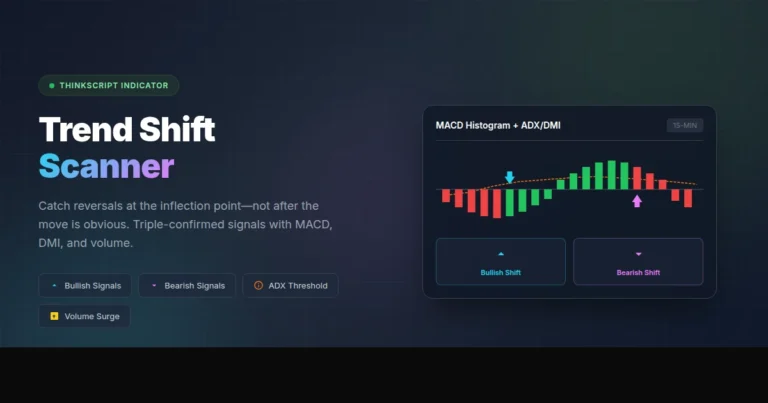 Trend Shift Scanner: Catch Reversals at the Inflection Point
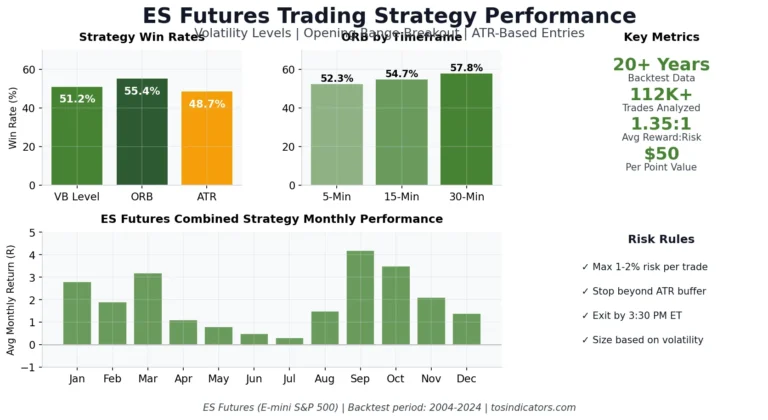 ES Futures Trading Strategy: Volatility Levels, ORB, and ATR-Based Entries
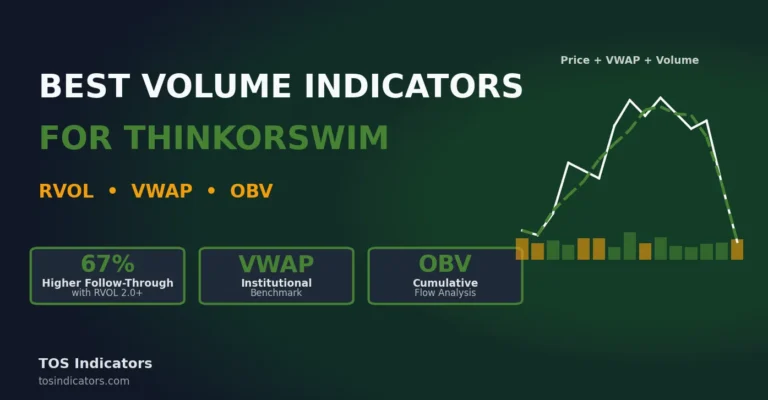 Best Volume Indicators for ThinkOrSwim: Relative Volume, VWAP, and OBV