
 Fair Value Gap
 False Breakout Scanner
 Heiken Ashi Trend
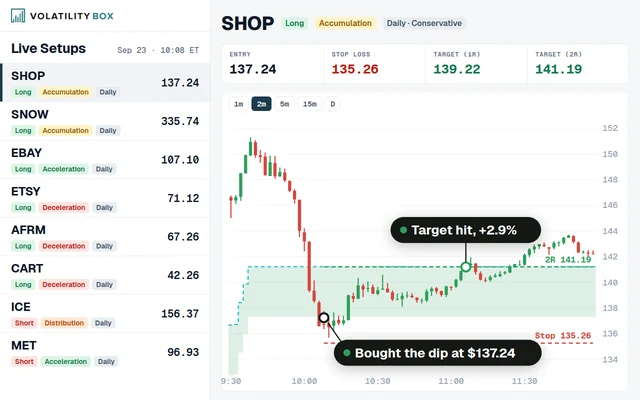 Stock Volatility Box
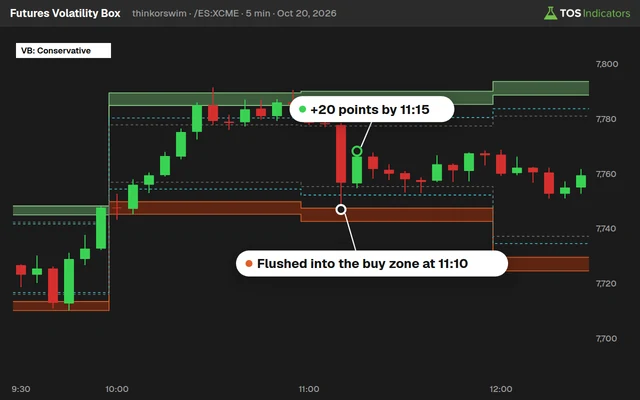 Futures Volatility Box
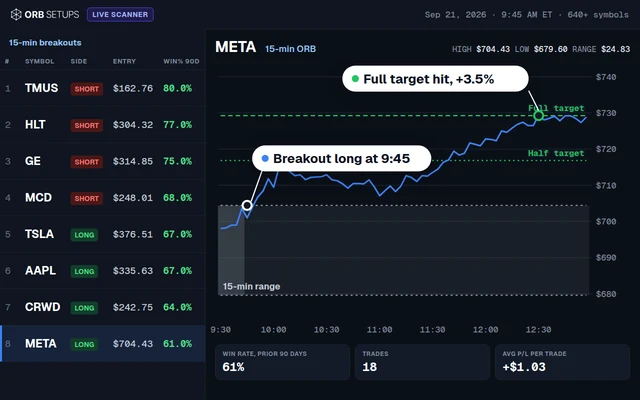 ORB Setups
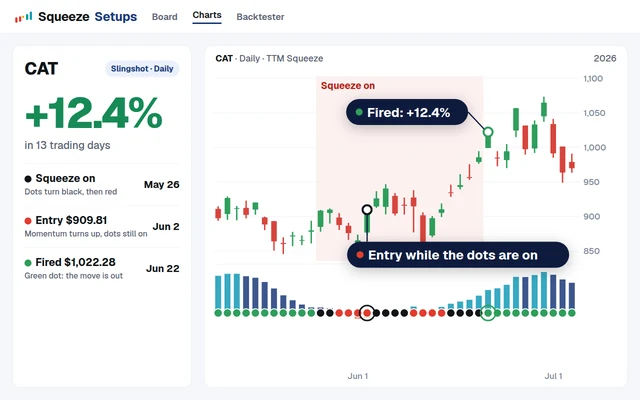 Squeeze Setups
What Is Sector Rotation in Trading?
Sector rotation is the movement of investment capital from one industry sector to another as economic conditions change. Institutional money managers shift billions between sectors based on where they expect the strongest earnings growth next. This rotation pattern repeats across every business cycle.
The concept relies on a fundamental reality: different sectors outperform at different stages of the economic cycle. Energy stocks may lead during late expansion while utilities dominate during contraction. Recognizing these shifts early gives traders a measurable edge.
The Global Industry Classification Standard (GICS) divides the U.S. equity market into 11 sectors. Each sector responds differently to interest rates, inflation, GDP growth, and consumer spending. Understanding these relationships is the foundation of rotation-based trading.
The 4 Phases of the Economic Cycle and Sector Leadership
The business cycle moves through four distinct phases: expansion, peak, contraction, and trough. Each phase creates a predictable environment where certain sectors attract capital while others lose it. The rotation sequence has remained consistent across decades of market data.
During early expansion, the economy recovers from recession. Interest rates are low, credit is expanding, and consumer confidence rebuilds. Technology, Consumer Discretionary, and Industrials historically lead this phase as earnings growth accelerates from depressed levels.
At the peak, growth rates slow even as absolute economic output remains high. Inflation typically rises, and the Federal Reserve tightens monetary policy. Energy and Materials outperform as commodity prices climb. This is where defensive positioning begins to matter.
During contraction, GDP declines and corporate earnings fall. Capital flows into defensive sectors: Utilities, Health Care, and Consumer Staples. These sectors provide steady dividends and recession-resistant revenue streams that institutional investors demand.
At the trough, the economy bottoms. Valuations are compressed and forward expectations reset lower. Financials and Real Estate begin to outperform as investors anticipate rate cuts and credit expansion in the coming recovery.
| Economic Phase | Leading Sectors | Lagging Sectors | Key Driver |
|---|---|---|---|
| Early Expansion | Technology, Consumer Discretionary, Industrials | Utilities, Consumer Staples | Rising earnings growth, low rates |
| Late Expansion / Peak | Energy, Materials, Industrials | Technology, Real Estate | Rising inflation, tightening policy |
| Contraction | Utilities, Health Care, Consumer Staples | Consumer Discretionary, Financials | Falling earnings, risk-off flows |
| Trough / Early Recovery | Financials, Real Estate, Communication Services | Energy, Materials | Rate cuts, credit expansion |
The 11 GICS Sectors and Their Sector ETFs
GICS organizes the entire U.S. equity market into 11 sectors, each tracked by a liquid SPDR sector ETF. These ETFs are the primary instruments traders use to measure and execute sector rotation strategies. Combined daily volume across all 11 exceeds $15 billion.
| Sector | ETF Ticker | Cycle Sensitivity | Key Characteristics |
|---|---|---|---|
| Technology | XLK | Cyclical | Growth-driven, rate-sensitive |
| Health Care | XLV | Defensive | Recession-resistant demand |
| Financials | XLF | Cyclical | Rate-sensitive, credit-linked |
| Consumer Discretionary | XLY | Cyclical | Consumer spending dependent |
| Consumer Staples | XLP | Defensive | Steady demand, high dividends |
| Energy | XLE | Late Cyclical | Commodity-price driven |
| Industrials | XLI | Cyclical | GDP-linked, capex-driven |
| Materials | XLB | Late Cyclical | Inflation hedge, commodity-tied |
| Utilities | XLU | Defensive | Bond proxy, rate-sensitive inverse |
| Real Estate | XLRE | Interest-Rate Sensitive | Rate-driven, yield-focused |
| Communication Services | XLC | Mixed | Growth + value hybrid |
How to Identify Sector Rotation in Real-Time
Sector rotation identification requires three complementary analysis methods: relative strength comparison, money flow analysis, and performance divergence tracking. No single metric captures the full picture. The strongest rotation signals occur when all three confirm the same directional shift.
Relative Strength Comparison
Relative strength measures how one sector performs compared to a benchmark, typically the S&P 500 (SPY). A rising relative strength line means the sector is outperforming the benchmark. A falling line means it is underperforming, even if its absolute price is rising.
The formula is straightforward: divide the sector ETF price by SPY. Plot this ratio over time. When the ratio trends higher, that sector is attracting more capital than the broad market. When it breaks below a moving average, the rotation is shifting away.
Money Flow and Volume Analysis
Volume confirms rotation signals that price alone cannot validate. Watch for increasing volume in the receiving sector paired with declining volume in the departing sector. The Cumulative TICK indicator helps measure aggregate buying pressure across sector components.
ETF fund flows data, published daily, shows net inflows and outflows for each sector ETF. Three consecutive weeks of net inflows signal sustained institutional interest. Single-day spikes often represent short-term hedging, not rotation.
Performance Divergence
Track the 20-day and 60-day performance spread between cyclical and defensive sectors. When cyclical sectors (XLK, XLY, XLI) begin underperforming defensive sectors (XLU, XLP, XLV) on a rolling basis, the market is pricing in economic deceleration.
Using Relative Strength Charts for Sector Comparison
Relative strength charting is the most reliable method for spotting sector rotation. The technique divides one security's price by another to create a ratio chart. When applied across all 11 sectors versus SPY, it produces a clear ranking of sector leadership and weakness.
Plot each sector ETF divided by SPY on the same chart. The sectors with rising ratio lines are leaders. The sectors with falling ratio lines are laggards. The crossover point where a lagging sector's ratio begins rising while a leader's ratio begins falling marks the rotation inflection.
Apply a 50-day moving average to each ratio line. When a sector's ratio crosses above its 50-day MA, that sector is gaining relative momentum. When it crosses below, momentum is fading. This filter removes day-to-day noise and highlights meaningful shifts. Learn more about layering multiple moving averages for trend confirmation.
For thinkorswim users, the ratio chart is simple to build. Enter "XLK/SPY" as a custom symbol in the chart. This instantly shows Technology's relative performance versus the broad market. Repeat for each sector to build a complete rotation dashboard.
Key Indicators for Sector Rotation Signals
Five indicators form the core toolkit for sector rotation analysis. Each captures a different dimension of the rotation process. Used together, they provide high-confidence signals for portfolio repositioning.
1. Sector ETF Relative Performance (20/60-Day)
Compare each sector's 20-day return against its 60-day return. When the 20-day return exceeds the 60-day, the sector is accelerating. When it falls below, momentum is decelerating. Rank all 11 sectors by this spread to find the strongest and weakest rotational candidates.
2. Sector Breadth (Advance-Decline Ratios)
Breadth measures how many stocks within a sector participate in its move. A sector rising on narrow breadth (few stocks driving gains) is vulnerable. A sector rising on expanding breadth (most components advancing) signals sustainable rotation. Track the percentage of sector components above their 50-day moving average.
3. Moving Average Structure
The alignment of moving averages reveals trend strength. When a sector ETF's 10-day, 20-day, and 50-day moving averages are stacked in bullish order (shortest on top), the sector is in a strong uptrend. When they invert, the sector is weakening. You can backtest moving average crossover strategies to validate these signals historically.
4. Intermarket Signals
Bond yields, the dollar index, and commodity prices drive sector rotation. Rising yields favor Financials and hurt Utilities. A strengthening dollar pressures Materials and Energy. Rising oil prices boost Energy but drag Transportation and Airlines. Track these relationships with a commodities tracker.
5. Supply and Demand Zones
Institutional buying and selling creates supply and demand zones on sector ETF charts. When a sector ETF bounces from a demand zone on increasing volume, it confirms accumulation. When it fails at a supply zone, distribution is occurring.
ThinkScript: Sector Relative Strength Scanner
The following ThinkScript code creates a sector relative strength comparison tool for thinkorswim. It calculates and plots the relative strength ratio of any sector ETF versus SPY, with a moving average overlay to identify rotation inflection points.
# Sector Relative Strength Ratio
# Compares any sector ETF to SPY
# Plots ratio with moving average for rotation signals

declare lower;

input sectorETF = "XLK";
input maLength = 50;
input showSignals = yes;

def sectorClose = close(symbol = sectorETF);
def spyClose = close(symbol = "SPY");

# Calculate relative strength ratio
def ratioValue = if spyClose > 0 then sectorClose / spyClose else 0;

# Normalize to percentage scale
def baseRatio = ratioValue[maLength];
def normalizedRatio = if baseRatio > 0 then (ratioValue / baseRatio - 1) * 100 else 0;

# Moving average of ratio
def ratioMA = Average(normalizedRatio, maLength);

# Plot
plot RelativeStrength = normalizedRatio;
plot SignalLine = ratioMA;

RelativeStrength.SetDefaultColor(Color.CYAN);
RelativeStrength.SetLineWeight(2);
SignalLine.SetDefaultColor(Color.YELLOW);
SignalLine.SetStyle(Curve.SHORT_DASH);

# Rotation signals
plot RotationUp = if showSignals and normalizedRatio crosses above ratioMA then normalizedRatio else Double.NaN;
plot RotationDown = if showSignals and normalizedRatio crosses below ratioMA then normalizedRatio else Double.NaN;

RotationUp.SetPaintingStrategy(PaintingStrategy.ARROW_UP);
RotationUp.SetDefaultColor(Color.GREEN);
RotationUp.SetLineWeight(3);

RotationDown.SetPaintingStrategy(PaintingStrategy.ARROW_DOWN);
RotationDown.SetDefaultColor(Color.RED);
RotationDown.SetLineWeight(3);

# Zero line
plot ZeroLine = 0;
ZeroLine.SetDefaultColor(Color.GRAY);
ZeroLine.SetStyle(Curve.SHORT_DASH);

# Cloud fill
AddCloud(normalizedRatio, ratioMA, Color.DARK_GREEN, Color.DARK_RED);
To use this indicator, add it to a lower study panel in thinkorswim. Change the sectorETF input to any SPDR sector ticker (XLK, XLF, XLE, etc.). Green arrows mark rotation into the sector. Red arrows mark rotation out. The cloud fill provides a visual read of relative momentum.
# Multi-Sector Rotation Dashboard
# Shows relative strength of all 11 sectors on one panel

declare lower;

input maLength = 20;

script calcRS {
    input sym = "SPY";
    input len = 20;
    def c = close(symbol = sym);
    def s = close(symbol = "SPY");
    def ratio = if s > 0 then c / s else 0;
    def base = ratio[len];
    plot rs = if base > 0 then (ratio / base - 1) * 100 else 0;
}

plot XLK_RS = calcRS("XLK", maLength);
plot XLV_RS = calcRS("XLV", maLength);
plot XLF_RS = calcRS("XLF", maLength);
plot XLY_RS = calcRS("XLY", maLength);
plot XLP_RS = calcRS("XLP", maLength);
plot XLE_RS = calcRS("XLE", maLength);
plot XLI_RS = calcRS("XLI", maLength);
plot XLB_RS = calcRS("XLB", maLength);
plot XLU_RS = calcRS("XLU", maLength);
plot XLRE_RS = calcRS("XLRE", maLength);
plot XLC_RS = calcRS("XLC", maLength);

XLK_RS.SetDefaultColor(Color.CYAN);
XLV_RS.SetDefaultColor(Color.MAGENTA);
XLF_RS.SetDefaultColor(Color.GREEN);
XLY_RS.SetDefaultColor(Color.ORANGE);
XLP_RS.SetDefaultColor(Color.YELLOW);
XLE_RS.SetDefaultColor(Color.RED);
XLI_RS.SetDefaultColor(Color.LIGHT_GRAY);
XLB_RS.SetDefaultColor(Color.PINK);
XLU_RS.SetDefaultColor(Color.WHITE);
XLRE_RS.SetDefaultColor(Color.VIOLET);
XLC_RS.SetDefaultColor(Color.LIGHT_GREEN);

plot ZeroLine = 0;
ZeroLine.SetDefaultColor(Color.GRAY);
ZeroLine.SetStyle(Curve.SHORT_DASH);How to Position Your Portfolio During Sector Rotation
Portfolio positioning during rotation requires a systematic approach rather than reactive trading. The goal is to overweight sectors entering leadership and underweight sectors losing momentum. This process involves three steps: identification, confirmation, and execution.
Step 1: Identify the Rotation Signal
Use the relative strength scanner to rank all 11 sectors weekly. Flag any sector whose relative strength ratio crosses above its 50-day moving average. Cross-reference with the economic cycle phase to validate the signal makes fundamental sense.
Step 2: Confirm with Breadth and Volume
Check that the receiving sector shows expanding breadth (rising percentage of components above their 50-day MA). Verify that ETF volume in the new leader is increasing on up days. Confirm that the departing sector shows narrowing breadth and rising volume on down days.
Step 3: Execute the Rotation
Reduce exposure to underperforming sectors gradually over 5-10 trading days. Build positions in outperforming sectors using limit orders near demand zones. Size positions based on conviction: full rotation signals warrant 15-25% sector allocation. Partial signals warrant 5-10%.
| Signal Strength | Criteria Met | Suggested Action | Position Size |
|---|---|---|---|
| Strong Rotation | RS crossover + breadth expansion + volume confirmation | Full sector overweight | 15-25% of portfolio |
| Moderate Rotation | RS crossover + one confirmation | Partial overweight | 5-10% of portfolio |
| Weak / Developing | RS crossover only, no confirmation | Watchlist only | No action yet |
| Counter-Rotation | RS breakdown + breadth deterioration | Reduce or exit sector | Trim to underweight |
Real-World Example: The 2024 Growth-to-Defensive Rotation
The rotation from growth to defensive sectors at the start of 2024 provides a textbook case study. After a strong 2023 driven by Technology and Communication Services, institutional capital began shifting into defensive sectors during the first trading days of January 2024.
The Volatility Box flagged unusual volatility expansion in defensive names while growth stocks showed compression. XLU (Utilities) and XLP (Consumer Staples) saw net inflows of over $2 billion in the first week. Meanwhile, XLK (Technology) experienced its first weekly outflow in months.
Relative strength charts confirmed the shift. XLU/SPY broke above its 50-day moving average while XLK/SPY broke below. The rotation lasted approximately 3 weeks before growth reasserted leadership. Traders who recognized the early signal captured a 4-6% relative performance advantage.
Common Mistakes in Sector Rotation Trading
Sector rotation strategies fail most often due to timing errors and confirmation bias. Traders frequently enter rotations too late or exit too early. Understanding these pitfalls improves execution quality and risk-adjusted returns.
Mistake 1: Ignoring intermarket context. A sector rotation signal without supporting intermarket evidence (bonds, commodities, dollar) is unreliable. Always check whether the macro backdrop supports the rotation thesis before committing capital.
Mistake 2: Overweighting a single sector. Concentrating more than 30% of a portfolio in one sector creates excessive risk. Even the strongest rotation signals can reverse suddenly due to policy changes, geopolitical events, or earnings surprises.
Mistake 3: Using absolute performance instead of relative. A sector can rise 5% while SPY rises 8%. That sector is underperforming despite positive absolute returns. Always analyze performance in relative terms using ratio charts, not price charts alone.
Mistake 4: Ignoring sector correlation shifts. When correlations between sectors spike (typically during market stress), rotation strategies lose effectiveness. Monitor the average correlation across sectors and reduce rotation activity when it exceeds 0.80.
 Simple Breakout Tool Scans
 Best Volume Indicators for ThinkOrSwim: Relative Volume, VWAP, and OBV
 Three Powerful Setups to Day Trade NASDAQ
 How to Recognize When a Trend Reverses
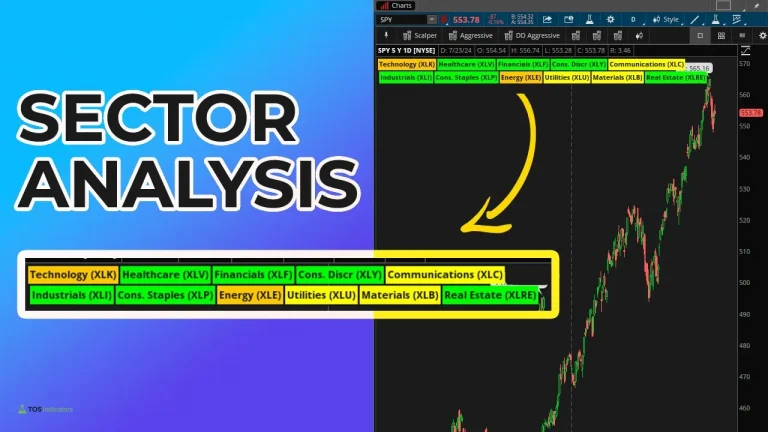 The Easiest Way to Track Sector Performance and Market Internals
 How to Use ChatGPT To Analyze Economic Reports