
 Fair Value Gap
 False Breakout Scanner
 Heiken Ashi Trend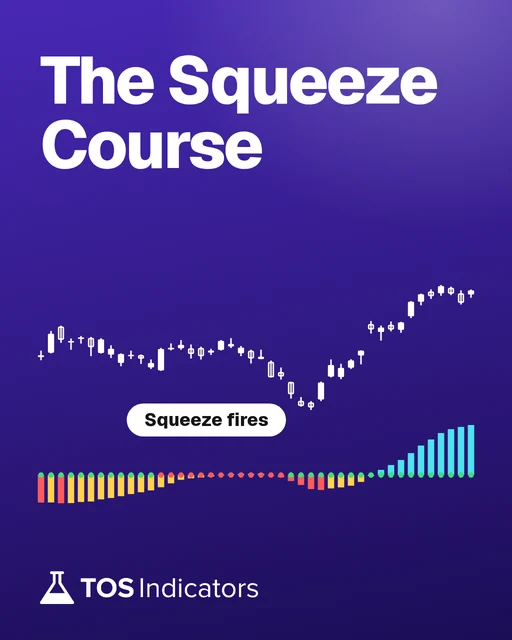
 Stock Volatility Box
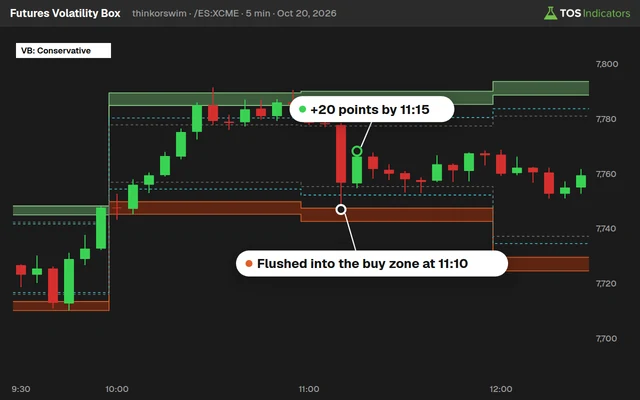 Futures Volatility Box
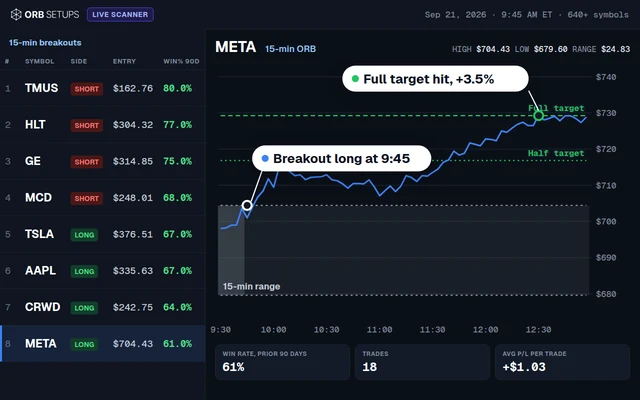 ORB Setups
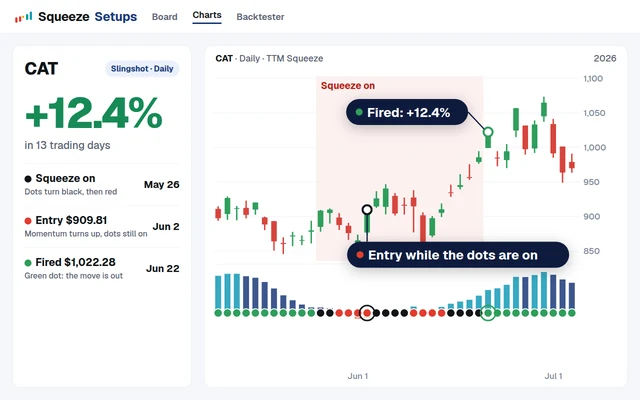 Squeeze Setups
Why TSLA on a 15-Minute Chart?
Tesla trades an average of 98 million shares per day. That volume creates clean, readable candle structures on a 15-minute chart that many other tickers simply cannot produce. Each 15-minute bar on TSLA carries enough transactions to form genuine price discovery patterns, giving traders a reliable foundation for bar-by-bar reading.
The 15-minute timeframe sits in a productive middle ground. It filters out the noise found on 1-minute and 5-minute charts while still capturing every meaningful intraday move. For TSLA specifically, each regular session (9:30 AM to 4:00 PM ET) produces 26 bars. That is enough data to identify opening drives, midday ranges, and afternoon directional moves without drowning in tick-level chop.
Traders using thinkorswim indicators on the 15-minute TSLA chart gain a structural advantage: the timeframe aligns well with institutional order flow patterns, VWAP calculations, and TTM Squeeze signals. Each bar represents a meaningful chunk of the session, and reading them in sequence tells a story about who is in control at any given moment.
Bar-by-Bar Reading Fundamentals
Bar-by-bar analysis follows a straightforward principle popularized by Al Brooks: every bar on a chart is either a trend bar, a non-trend bar, or a reversal bar. The job of the price action reader is to classify each bar, understand its context relative to prior bars, and make probabilistic assessments about what comes next.
On the 15-minute TSLA chart, this classification matters because TSLA tends to move in distinct phases throughout the day. Recognizing the shift from one phase to another happens at the bar level. Here is what to look for on each bar:
| Bar Type | Characteristics on 15-Min TSLA | What It Signals |
|---|---|---|
| Strong Trend Bar (Bull) | Large body, close near high, above-average volume | Buyers in control; continuation likely |
| Strong Trend Bar (Bear) | Large body, close near low, above-average volume | Sellers in control; continuation likely |
| Doji / Inside Bar | Small body, wicks on both sides, lower volume | Indecision; potential reversal or pause |
| Reversal Bar (Bull) | Long lower wick, close in upper third, volume spike | Buyers stepped in; watch for follow-through |
| Reversal Bar (Bear) | Long upper wick, close in lower third, volume spike | Sellers rejected the high; possible turn |
| Outside Bar | Range exceeds prior bar high and low | Expansion; direction of close determines bias |
Session Phase 1: The Opening Drive (9:30 AM - 10:15 AM)
The first three 15-minute bars of any TSLA session carry outsized importance. Overnight gap positioning, pre-market earnings reactions, and institutional rotation all converge in these opening bars. On TSLA, the opening drive typically accounts for 20-30% of the total daily range.
Reading the opening drive bar-by-bar requires attention to three variables: gap direction relative to the prior close, the size and conviction of the first bar, and the follow-through (or lack of it) on bars two and three.
If the first 15-minute bar is a strong bull trend bar that closes near its high, and the second bar holds above the midpoint of bar one, buyers are establishing control. On TSLA, this pattern frequently leads to a continuation move that extends through 10:30 AM. The reverse structure (strong bear bar one, bar two closing below midpoint of bar one) signals a sell-the-open scenario.
The third bar is the confirmation bar. If it forms an inside bar after two strong trend bars, it signals the opening push is losing steam and a pullback is likely. If it extends the range with another trend bar in the same direction, the opening drive has legs, and pullback entries become the primary setup.
Session Phase 2: The Mid-Morning Transition (10:15 AM - 11:30 AM)
After the opening drive exhausts its momentum, TSLA enters a transition phase. This is where the first pullback occurs in a trending open, or where a range begins to form if the open was choppy. On the 15-minute chart, you will typically see bar size shrink, wicks grow longer, and volume decline from the opening surge.
The key bar to watch during this phase is the first pullback bar in an uptrend (or first rally bar in a downtrend). On TSLA, a healthy pullback on the 15-minute chart retraces 38-50% of the opening move, holds above VWAP, and forms one or two smaller-bodied bars before a new trend bar appears in the original direction.
If the pullback exceeds 62% of the opening move, or if it forms three or more consecutive bars against the trend, the opening direction is losing conviction. This is the point where many traders get trapped chasing the open. Price action readers who track each bar will notice the shift in character before the trap closes.
During the mid-morning transition, VWAP becomes the primary reference point. On TSLA, watch how price interacts with VWAP on each 15-minute bar. Bars that close above VWAP with increasing volume after a pullback confirm the bullish structure. Bars that close below VWAP after previously holding above it signal a potential trend change.
Tracking Volume Patterns on the 15-Minute Chart
Volume on TSLA follows a predictable U-shaped curve throughout the day. The highest volume occurs in the first 30-45 minutes, declines through midday, and picks up again after 2:00 PM. Understanding this rhythm is central to accurate bar-by-bar reading because volume validates (or invalidates) every price move.
| Time Window | Typical TSLA 15-Min Volume | Bar Reading Implications |
|---|---|---|
| 9:30 - 10:00 AM | 8-15M shares per bar | High conviction moves; trend bars are reliable |
| 10:00 - 11:00 AM | 4-7M shares per bar | Still tradeable; watch for volume divergence |
| 11:00 AM - 1:00 PM | 2-4M shares per bar | Low conviction; range bars dominate |
| 1:00 - 2:30 PM | 3-5M shares per bar | Transition zone; early signs of afternoon direction |
| 2:30 - 4:00 PM | 6-12M shares per bar | Institutional positioning; trend bars regain reliability |
When reading bars during the low-volume midday period, apply a higher standard for signal validity. A strong trend bar on 2M shares during the lunch hour does not carry the same weight as the same bar on 10M shares at the open. Conversely, any bar during the midday lull that prints on above-average volume deserves immediate attention because it signals unusual institutional activity.
# 15-Minute Volume Relative Strength Indicator
# Compares current bar volume to session average

declare lower;

def sessionStart = SecondsFromTime(0930) >= 0 and SecondsTillTime(1600) > 0;
def barCount = if sessionStart and !sessionStart[1] then 1
               else if sessionStart then barCount[1] + 1
               else barCount[1];
def cumVol = if sessionStart and !sessionStart[1] then volume
             else if sessionStart then cumVol[1] + volume
             else cumVol[1];
def avgBarVol = if barCount > 0 then cumVol / barCount else 0;
def relVol = if avgBarVol > 0 then (volume / avgBarVol) * 100 else 0;

plot RelativeVolume = relVol;
plot Baseline = 100;
plot HighVol = 150;

RelativeVolume.SetPaintingStrategy(PaintingStrategy.HISTOGRAM);
RelativeVolume.AssignValueColor(
    if relVol >= 150 then Color.GREEN
    else if relVol >= 100 then Color.YELLOW
    else Color.GRAY
);
Baseline.SetDefaultColor(Color.WHITE);
HighVol.SetDefaultColor(Color.GREEN);
HighVol.SetStyle(Curve.SHORT_DASH);
This indicator plots a histogram showing whether the current 15-minute bar has above-average or below-average volume relative to the session. Bars printing at 150% or above (green) deserve the most attention in your bar-by-bar read. Use it alongside the Volatility Box to identify bars where volume and volatility expansion align.
Session Phase 3: Midday Consolidation (11:30 AM - 1:30 PM)
The midday period on TSLA is where most retail traders lose money. Volume drops, ranges contract, and the 15-minute bars produce a string of overlapping, indecisive candles. From a bar-by-bar perspective, this is the phase to reduce position size or step aside entirely.
What you are looking for during midday consolidation is the formation of a range. Identify the high and low of the consolidation zone by marking the highest high and lowest low of the 15-minute bars between 11:30 AM and 1:30 PM. This range becomes the launchpad for the afternoon move.
On TSLA, midday consolidation ranges typically span $3-$6 depending on the stock price level. The bars inside the range will show:
- Alternating small bull and bear bars (two-sided trading)
- Multiple doji and inside bars
- Declining volume on each successive bar
- Failed breakout attempts at range edges (wicks poking above/below then closing back inside)
The bar that breaks out of the midday range on above-average volume is the setup bar for the afternoon trade. Do not anticipate the breakout. Wait for a 15-minute bar to close outside the range with a body that represents at least 60% of the total bar range. That is your signal.
Session Phase 4: Afternoon Breakout or Breakdown (1:30 PM - 3:00 PM)
The afternoon session is where TSLA reveals its hand. Institutional order flow picks up, algorithms increase activity, and the 15-minute bars begin printing with conviction again. This is the phase where the day's primary directional move often completes or a significant reversal begins.
Reading the afternoon bars requires you to connect them to the morning context. Ask three questions for each bar after 1:30 PM:
- Is this bar extending the morning trend or reversing it?
- Is volume expanding relative to the midday lull?
- Is price above or below VWAP, and is VWAP itself trending or flat?
On trending days, TSLA typically holds above VWAP all day (bullish) or below VWAP all day (bearish). The afternoon bars will produce higher lows above VWAP on bull days, or lower highs below VWAP on bear days. The bar-by-bar reader looks for each successive bar to confirm the structure.
On reversal days, the afternoon will produce a clear break of the morning structure. The first 15-minute bar that closes on the opposite side of VWAP from where it spent the morning, with above-average volume, is the reversal signal. Follow-through on the next bar confirms the reversal.
# VWAP Trend Bias Label for 15-Minute Charts
# Shows real-time VWAP position and bar context

def vwapLine = vwap();
def aboveVWAP = close > vwapLine;
def belowVWAP = close < vwapLine;

# Count consecutive bars above/below VWAP
def barsAbove = if aboveVWAP then barsAbove[1] + 1 else 0;
def barsBelow = if belowVWAP then barsBelow[1] + 1 else 0;

# Bar body percentage (conviction measure)
def barRange = high - low;
def bodySize = AbsValue(close - open);
def bodyPct = if barRange > 0 then (bodySize / barRange) * 100 else 0;

AddLabel(yes,
    "VWAP Bias: " +
    (if barsAbove >= 3 then "BULL (" + barsAbove + " bars above)"
     else if barsBelow >= 3 then "BEAR (" + barsBelow + " bars below)"
     else "NEUTRAL"),
    if barsAbove >= 3 then Color.GREEN
    else if barsBelow >= 3 then Color.RED
    else Color.YELLOW
);

AddLabel(yes,
    "Body%: " + Round(bodyPct, 0) + "%",
    if bodyPct >= 60 then Color.GREEN
    else if bodyPct >= 40 then Color.YELLOW
    else Color.RED
);
Support and Resistance on the 15-Minute TSLA Chart
Support and resistance levels on the 15-minute chart come from two primary sources: structural levels formed during the current session and reference levels carried over from prior sessions. Both types interact with price action in ways that create the highest-probability trading setups.
Current-session structural levels form at the high and low of the opening range (first 15-30 minutes), the VWAP line, the midday consolidation range boundaries, and any point where price reversed on high volume. Prior-session levels include the prior day's high, low, and close, the prior day's VWAP close, and any unfilled gaps.
On TSLA specifically, the current key levels to monitor are the $400-$402 demand zone (structural support), the $416-$420 zone (short-term pivot area), the $427-$430 resistance pocket (prior rejection zone and options call wall), and the $444-$445 area (50-day moving average and major overhead resistance).
When reading bars at these levels, watch for rejection patterns. A 15-minute bar that tests a resistance level and closes in its lower third with an upper wick is a rejection bar. Two consecutive rejection bars at the same level confirm the resistance is holding. The reverse logic applies at support levels.
Combining TTM Squeeze with 15-Minute Price Action
The TTM Squeeze indicator is a natural companion to bar-by-bar price action reading on the 15-minute TSLA chart. The Squeeze identifies periods of low volatility (Bollinger Bands inside Keltner Channels) and signals when a breakout is imminent. Overlaying this information onto your bar reading adds a volatility dimension to pure price analysis.
On the 15-minute TSLA chart, a squeeze (red dots on the TTM Squeeze) typically builds during the midday consolidation phase. The dots turn green (squeeze fires) when a 15-minute bar expands beyond the compressed range. The direction of the histogram at the moment the squeeze fires tells you which way to trade.
Here is the sequence for combining TTM Squeeze with bar-by-bar reading on TSLA:
- Identify red dots forming on the 15-minute TTM Squeeze (compression building)
- Note the midday range boundaries on the price chart
- Watch for the first green dot (squeeze fires)
- Read the bar that coincides with the first green dot: Is it a trend bar? What is the body percentage? Is volume above average?
- If the bar is a strong trend bar with 60%+ body and above-average volume, enter in the direction of the bar close
- If the bar is indecisive (doji, small body), wait for the next bar to confirm direction
# TTM Squeeze + Bar Quality Filter for TSLA
# Highlights bars where squeeze fires AND bar shows conviction

declare upper;

# TTM Squeeze status
def squeeze = TTM_Squeeze();
def squeezeAlert = TTM_Squeeze().SqueezeAlert;
def squeezeFired = squeezeAlert[1] == 0 and squeezeAlert == 1;

# Bar quality metrics
def barRange = high - low;
def bodySize = AbsValue(close - open);
def bodyPct = if barRange > 0 then (bodySize / barRange) * 100 else 0;
def bullBar = close > open;
def bearBar = close < open;

# Volume check
def avgVol = Average(volume, 20);
def highVol = volume > avgVol * 1.2;

# Signal conditions
def bullSignal = squeezeFired and bullBar and bodyPct >= 55 and highVol;
def bearSignal = squeezeFired and bearBar and bodyPct >= 55 and highVol;

# Plot arrows on qualifying bars
plot BullArrow = if bullSignal then low - (barRange * 0.5) else Double.NaN;
plot BearArrow = if bearSignal then high + (barRange * 0.5) else Double.NaN;

BullArrow.SetPaintingStrategy(PaintingStrategy.ARROW_UP);
BullArrow.SetDefaultColor(Color.CYAN);
BullArrow.SetLineWeight(3);

BearArrow.SetPaintingStrategy(PaintingStrategy.ARROW_DOWN);
BearArrow.SetDefaultColor(Color.MAGENTA);
BearArrow.SetLineWeight(3);

AddLabel(yes,
    if squeezeFired then "SQUEEZE FIRED"
    else if squeezeAlert == 0 then "SQUEEZE ON"
    else "NO SQUEEZE",
    if squeezeFired then Color.GREEN
    else if squeezeAlert == 0 then Color.RED
    else Color.GRAY
);
Apply the Volatility Box alongside this setup. When the Volatility Box levels align with the TTM Squeeze fire direction, you have a multi-confirmation signal that substantially increases the probability of a successful trade on TSLA.
Session Phase 5: The Closing Drive (3:00 PM - 4:00 PM)
The final hour of TSLA trading produces the last four 15-minute bars of the session. These bars carry institutional weight as portfolio managers, market makers, and algorithmic systems execute end-of-day positioning. Volume typically surges to levels comparable to the opening drive.
Bar-by-bar reading during the close focuses on continuation versus exhaustion. If TSLA has been trending all day and the 3:00 PM bar is a strong trend bar in the trend direction with expanding volume, the trend is likely to continue into the close. If the 3:00 PM bar is a reversal bar or doji on high volume, late-day profit-taking may reverse the afternoon move.
The 3:45 PM bar (the final 15-minute bar) is particularly important for swing traders and anyone holding overnight. This bar reflects the market's consensus heading into the close. A strong bullish close on TSLA (close in the upper 25% of the day's range on high volume) suggests gap-up potential the next morning. A weak close (lower 25% of the range) suggests potential gap-down risk.
Reading Candle Wicks and Bodies: A TSLA-Specific Guide
On TSLA's 15-minute chart, the relationship between wick length and body size provides direct insight into the balance of power between buyers and sellers during each 15-minute auction period.
TSLA tends to produce bars with characteristics shaped by its high volatility (beta 1.7) and deep liquidity. Here are the patterns to watch:
- Full-body bars with minimal wicks: These are high-conviction trend bars. On TSLA, a full-body 15-minute bar typically covers $1.50-$3.00. These bars signal one side is in complete control.
- Long lower wicks with small bodies at tops: Hanging man patterns on the 15-minute chart. On TSLA, these frequently appear at intraday resistance levels and often precede 2-3 bar pullbacks.
- Long upper wicks with small bodies at lows: Inverted hammer patterns. On TSLA, these appear at support and signal potential bounce setups.
- Equal wicks with small body (spinning top): Pure indecision. On TSLA, clusters of spinning tops on the 15-minute chart confirm a range-bound environment. Do not trade directionally until a trend bar breaks the cluster.
# Candle Structure Classifier for 15-Minute Charts
# Labels each bar type in real time

def barRange = high - low;
def bodySize = AbsValue(close - open);
def upperWick = high - Max(close, open);
def lowerWick = Min(close, open) - low;
def bodyPct = if barRange > 0 then (bodySize / barRange) * 100 else 0;

# Classification logic
def isTrendBar = bodyPct >= 60;
def isDoji = bodyPct <= 20;
def isReversal = (lowerWick > bodySize * 2 and close > open) or
                 (upperWick > bodySize * 2 and close < open);
def isInsideBar = high < high[1] and low > low[1];
def isOutsideBar = high > high[1] and low < low[1];

# Color the bars by type
AssignPriceColor(
    if isTrendBar and close > open then Color.GREEN
    else if isTrendBar and close < open then Color.RED
    else if isDoji then Color.GRAY
    else if isReversal then Color.CYAN
    else if isInsideBar then Color.YELLOW
    else if isOutsideBar then Color.MAGENTA
    else Color.WHITE
);

AddLabel(yes,
    "Bar Type: " +
    (if isTrendBar then "TREND"
     else if isDoji then "DOJI"
     else if isReversal then "REVERSAL"
     else if isInsideBar then "INSIDE"
     else if isOutsideBar then "OUTSIDE"
     else "NEUTRAL"),
    Color.WHITE
);
Using the Volatility Box for TSLA 15-Minute Trade Levels
The Volatility Box generates dynamic support and resistance levels based on statistical volatility calculations. On the 15-minute TSLA chart, these levels act as probabilistic boundaries for price movement during each session.
When combining Volatility Box levels with bar-by-bar reading, the approach is straightforward:
- Plot the Volatility Box on your 15-minute TSLA chart at the session open
- Note the upper and lower expected move boundaries
- As each 15-minute bar prints, read the bar in the context of its position relative to the Volatility Box levels
- Bars that approach a Volatility Box boundary and show rejection (long wicks, shrinking bodies) confirm the level as a potential reversal zone
- Bars that break through a Volatility Box level with conviction (full body, high volume) signal an expansion day where the standard range may be exceeded
For futures traders watching TSLA alongside index futures, the Volatility Box on ES or NQ futures can provide additional context for TSLA's expected range. When both TSLA and the broad market approach their respective Volatility Box boundaries simultaneously, the confluence strengthens the signal.
Building a Complete 15-Minute TSLA Session Read
Putting all the elements together, here is a full-session framework for reading TSLA bar-by-bar on the 15-minute chart. This is a structured approach you can replicate every trading day.
Pre-Market (Before 9:30 AM):
- Note the prior day's high, low, close, and VWAP close
- Identify the overnight range and any gaps
- Mark key support and resistance levels from the daily chart
- Check the Volatility Box expected range for the session
Opening Drive (9:30 - 10:15 AM, Bars 1-3):
- Read bar 1 for gap fill or gap continuation
- Read bar 2 for follow-through or rejection
- Read bar 3 for confirmation or exhaustion
- Establish the opening range high and low
Mid-Morning (10:15 - 11:30 AM, Bars 4-8):
- Track the first pullback and its depth relative to the opening move
- Monitor VWAP interaction on each bar
- Watch for trend continuation or range formation
Midday (11:30 AM - 1:30 PM, Bars 9-16):
- Identify the consolidation range
- Reduce trading activity; focus on observation
- Watch for TTM Squeeze building (red dots)
Afternoon (1:30 - 3:00 PM, Bars 17-22):
- Watch for range breakout with volume
- Read the breakout bar for conviction (body %, volume)
- Trade in the breakout direction if confirmed
Closing Drive (3:00 - 4:00 PM, Bars 23-26):
- Read for trend continuation or exhaustion
- Note the close position relative to the day's range
- Assess overnight bias based on the final bars
Common Mistakes in TSLA 15-Minute Bar Reading
After observing thousands of 15-minute TSLA bars, certain mistakes appear repeatedly among traders attempting bar-by-bar analysis. Avoiding these errors will improve your reading accuracy significantly.
Mistake 1: Treating all bars equally regardless of time. A strong trend bar at 12:15 PM on low volume does not carry the same weight as the same bar at 9:45 AM on high volume. Always weight your bar reading by the time-of-day volume profile.
Mistake 2: Ignoring context for isolated signals. A reversal bar at the top of an uptrend near resistance is meaningful. The same reversal bar in the middle of a range during midday chop is noise. Context always overrides the individual bar pattern.
Mistake 3: Anticipating breakouts from midday ranges. The natural bias is to trade the first bar that pokes outside the range. On TSLA, the first breakout attempt from the midday range fails roughly 50% of the time. Wait for a closing breakout with confirmation.
Mistake 4: Overreacting to single wicks. A long upper wick on one bar is not automatically bearish. It becomes bearish only if the next bar confirms by closing below the prior bar's close. Single-bar signals require follow-through.
ThinkScript Tools for Real-Time Bar Analysis
The ThinkScript indicators shown throughout this post are designed to work together as a system on the 15-minute TSLA chart. Here is how to deploy them in thinkorswim for a complete bar-by-bar reading workstation:
Chart Setup:
- Primary chart: 15-minute TSLA with the Candle Structure Classifier (color-coded bars)
- Lower study 1: Volume Relative Strength Indicator (histogram)
- Lower study 2: TTM Squeeze + Bar Quality Filter
- Labels: VWAP Trend Bias Label
- Overlays: Volatility Box levels, prior day high/low/close
With this configuration, every 15-minute bar on TSLA gives you immediate visual feedback: bar type (color), volume quality (histogram), squeeze status (dots and arrows), and VWAP bias (label). You do not need to calculate anything manually. The thinkorswim indicators handle the quantification while you focus on reading the price action story.
For traders who also run thinkorswim scanners, consider building a scan that fires when TSLA prints a strong trend bar (body > 60%) on above-average volume while the TTM Squeeze is active. This scan will alert you to the exact bar where the squeeze fires with conviction, even if you are watching other charts.
# TSLA 15-Min Opening Range Breakout Levels
# Auto-plots first 30-min high/low on chart

declare upper;

def openRangeStart = SecondsFromTime(0930) >= 0;
def openRangeEnd = SecondsFromTime(1000) >= 0;
def isOpenRange = openRangeStart and !openRangeEnd;

def orbHigh = if isOpenRange and !isOpenRange[1]
              then high
              else if isOpenRange
              then Max(orbHigh[1], high)
              else orbHigh[1];

def orbLow = if isOpenRange and !isOpenRange[1]
             then low
             else if isOpenRange
             then Min(orbLow[1], low)
             else orbLow[1];

plot ORBHigh = if openRangeEnd then orbHigh else Double.NaN;
plot ORBLow = if openRangeEnd then orbLow else Double.NaN;
plot ORBMid = if openRangeEnd then (orbHigh + orbLow) / 2 else Double.NaN;

ORBHigh.SetDefaultColor(Color.GREEN);
ORBHigh.SetStyle(Curve.LONG_DASH);
ORBLow.SetDefaultColor(Color.RED);
ORBLow.SetStyle(Curve.LONG_DASH);
ORBMid.SetDefaultColor(Color.YELLOW);
ORBMid.SetStyle(Curve.SHORT_DASH);
Adapting to TSLA's Current Market Structure
As of mid-February 2026, TSLA trades in the $400-$420 range after pulling back from its late-2025 highs near $499. The daily chart shows lower highs forming, and the stock has been respecting a descending trendline from the December peak. This broader context shapes how you read the 15-minute bars.
In a daily downtrend or consolidation, 15-minute bar reading should carry a bearish or neutral bias. This means:
- Bull trend bars on the 15-minute chart are more likely to be short-covering rallies than new uptrend legs
- Bear trend bars at resistance levels carry more weight than bull trend bars at support
- The $400-$402 support zone is the key level to watch. A 15-minute close below $400 on above-average volume would confirm a bearish breakdown
- The $427-$430 resistance zone is the ceiling. Multiple rejection bars at this level confirm the overhead supply
Use the Squeeze Course framework to understand how the daily and 15-minute timeframes interact. When the daily TTM Squeeze fires bearish and the 15-minute chart produces a bearish trend bar at resistance, the alignment across timeframes creates a high-conviction short setup. When the daily squeeze fires bullish and the 15-minute shows bullish absorption at support, the long setup gains the multi-timeframe confirmation that professional traders require.
Tools Referenced in This Analysis
- Volatility Box for Stocks - Dynamic support/resistance levels based on statistical volatility
- Volatility Box for Futures - ES/NQ expected move levels for cross-market confirmation
- TTM Squeeze Course - Complete framework for trading squeeze setups across timeframes
- Free ThinkOrSwim Indicators - 50+ thinkorswim scripts for day trading and swing trading
Frequently Asked Questions
What is the best timeframe for reading TSLA price action bar by bar?
The 15-minute chart is the primary timeframe for bar-by-bar TSLA analysis. It produces 26 bars per regular session, which is enough to capture every intraday phase (opening drive, midday consolidation, afternoon breakout, closing drive) without the noise of lower timeframes. For confirmation, pair the 15-minute chart with a daily chart to maintain awareness of the broader trend structure. Some traders also reference a 5-minute chart for entry timing within 15-minute setups, but the 15-minute bar remains the decision timeframe.
How do I identify high-probability bars on the 15-minute TSLA chart?
High-probability bars meet three criteria: body percentage above 60% (strong conviction), volume above the session average (institutional participation), and location at a meaningful level (VWAP, prior day high/low, Volatility Box boundary, or opening range breakout level). When all three align, the bar provides a high-probability signal. Use the Candle Structure Classifier ThinkScript indicator shown above to color-code bars by type and the Volume Relative Strength indicator to verify volume quality in real time with your thinkorswim indicators.
Can I use TTM Squeeze on a 15-minute chart for TSLA day trading?
Yes. The TTM Squeeze on thinkorswim works well on the 15-minute TSLA chart. It typically fires 2-4 times per session, primarily during the transition out of midday consolidation. The key is filtering squeeze fires with bar quality. Not every squeeze fire produces a tradeable move. Use the TTM Squeeze + Bar Quality Filter script provided in this post to highlight only the fires that coincide with strong trend bars and above-average volume. This filter eliminates weak signals and keeps you focused on the high-conviction setups.
What volume should I look for on a 15-minute TSLA bar to confirm a breakout?
On TSLA, a valid breakout bar on the 15-minute chart should print at least 120-150% of the session's average bar volume. During the opening drive, average per-bar volume is 8-15 million shares. During midday, it drops to 2-4 million. A breakout from a midday range that prints 5-6 million shares on a single 15-minute bar is a strong volume confirmation. The Volume Relative Strength ThinkScript indicator will calculate this automatically and color-code bars green when they exceed 150% of the session average.
How do I combine VWAP with bar-by-bar reading on TSLA?
VWAP serves as the session's anchor price. On each 15-minute bar, note whether price is above or below VWAP. Three consecutive closes above VWAP establish a bullish bias; three below establish a bearish bias. The most important bars are the ones that interact directly with VWAP: a bar that pulls back to VWAP and closes above it with a strong body (bullish rejection of VWAP) confirms the uptrend. A bar that rallies to VWAP and closes below it (bearish rejection) confirms the downtrend. The VWAP Trend Bias Label script automates this tracking on your thinkorswim scripts for day trading setup.
What are the biggest mistakes traders make reading TSLA 15-minute bars?
The four primary mistakes are: treating all bars equally regardless of time-of-day volume, ignoring the broader daily chart context, anticipating breakouts from midday ranges before confirmation, and overreacting to single wicks without waiting for follow-through. TSLA's high retail and algorithmic participation creates frequent stop runs and false breakouts, especially at obvious levels. The solution is to read bar closes rather than intrabar action, wait for follow-through bars to confirm signals, and always weight your analysis by time-of-day volume. Pairing these habits with the Volatility Box and TTM Squeeze reduces false signals and improves trade selection.
 Should You Trade During the Lunch Time Hour?
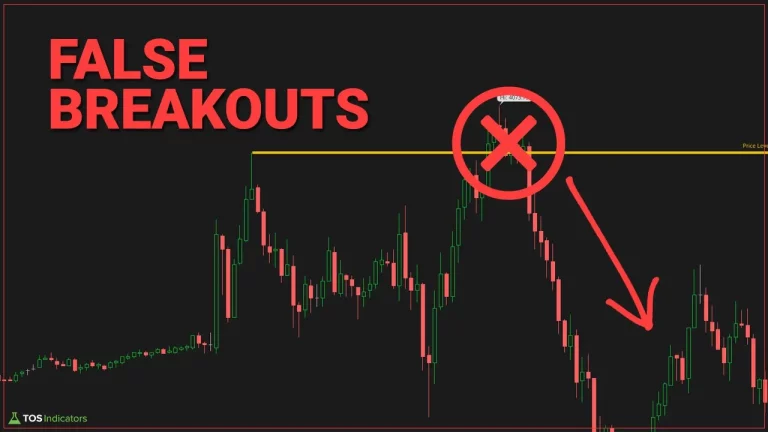 How to Identify and Trade False Breakouts
 Best ThinkOrSwim Indicators: 15 Custom Studies Every Trader Needs
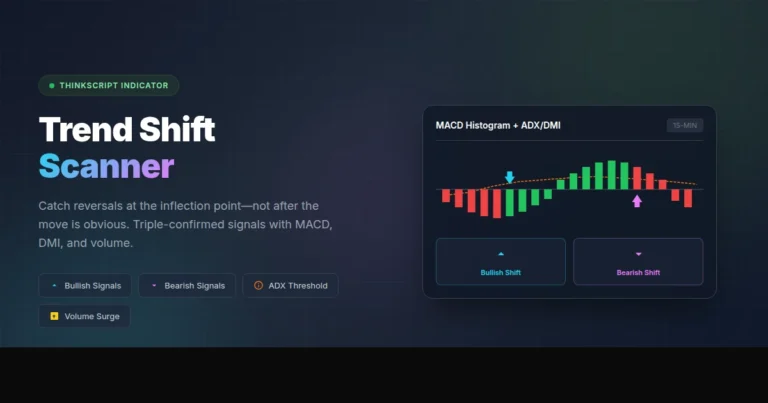 Trend Shift Scanner: Catch Reversals at the Inflection Point
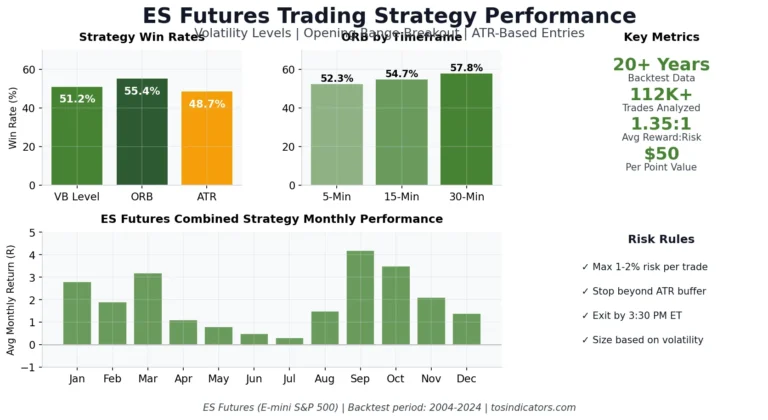 ES Futures Trading Strategy: Volatility Levels, ORB, and ATR-Based Entries