
First VIX Warning Signal of 2023
The first VIX warning signal of 2023 revealed a bearish divergence between rising stock prices and a stubborn VIX. This research breaks down VIX divergences, Bollinger Band squeezes, ThinkScript code for ThinkOrSwim, and historical signal accuracy data.

- What Is the VIX and Why Does It Matter?
- The First VIX Warning Signal of 2023
- How VIX Divergences Signal Market Turns
- Historical VIX Signal Accuracy
- Setting Up VIX Monitoring in ThinkOrSwim
- Building a VIX Bollinger Band Squeeze Scanner
- Using ThinkOrSwim Scanners to Detect VIX Signals
- ThinkScript Code for VIX Spike Reversal Alerts
- VIX and the Volatility Box: Advanced Confirmation
- Understanding VIX Bollinger Band Squeeze Mechanics
- Day Trading Applications with VIX Signals
- The Impact of 0DTE Options on VIX Signals
- Combining VIX Signals with the TTM Squeeze
- Practical Trade Management Using VIX Signals
- Frequently Asked Questions
The VIX, often called the market's "fear gauge," delivered its first warning signal of 2023 in the opening weeks of the year. That signal arrived as the S&P 500 was grinding higher off its October 2022 lows. Understanding what VIX divergences and spikes communicate about future market direction is a skill that separates disciplined traders from reactive ones.
This research post breaks down what happened with the first VIX warning signal of 2023, how to identify these signals using thinkorswim indicators, and what history tells us about signal reliability. We will also walk through ThinkScript code for your own VIX monitoring system, along with Bollinger Band squeeze analysis on the VIX itself.
What Is the VIX and Why Does It Matter?
The CBOE Volatility Index (VIX) measures the market's expectation of 30-day forward-looking volatility, derived from S&P 500 index option prices. When traders pay more for options protection, the VIX rises. When confidence grows and hedging demand fades, the VIX falls.
Over the entire available history since 1990, the correlation between daily percentage changes of the S&P 500 and the VIX has been -0.70. On roughly one out of five trading days, the VIX and S&P 500 move in the same direction. These divergence days are where warning signals originate.
The First VIX Warning Signal of 2023
In early January 2023, the S&P 500 began rallying off its late-2022 lows. The market had suffered through a brutal 2022, with the index dropping over 19% for the year. As buying pressure returned, many expected the VIX to decline in tandem with the recovery.
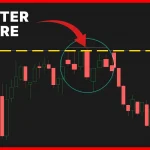
Instead, the VIX printed a notable divergence. While the S&P 500 pushed higher on consecutive sessions, the VIX failed to make new lows. This bearish divergence between a rising market and a stubborn VIX was the first warning signal of the year. Options market participants were not buying into the rally, maintaining elevated hedging activity even as prices rose.
The S&P 500 did experience a pullback in February 2023 before eventually recovering and posting a strong 7.5% gain for Q1 2023.
How VIX Divergences Signal Market Turns
| Divergence Type | Market Action | VIX Action | Signal Interpretation |
|---|---|---|---|
| Bearish Divergence | S&P 500 making higher highs | VIX making higher lows | Potential market top or pullback incoming |
| Bullish Divergence | S&P 500 making lower lows | VIX making lower highs | Potential market bottom or reversal incoming |
| VIX Spike Reversal | Market sells off sharply | VIX spikes above 25, then reverses | Selling exhaustion, bounce probable within 5-10 days |
| VIX Compression | Market range-bound | VIX below 15 for extended period | Major move incoming (direction uncertain) |
Historical VIX Signal Accuracy
The strongest predictive relationship occurs over a rolling 252-day window, where the VIX-to-SPX correlation averages -0.80. On March 16, 2020, the rolling correlation hit -0.96, coinciding with the largest single-day VIX spike in history.
| Year | Average VIX | S&P 500 Return | Notable VIX Signal | Signal Outcome |
|---|---|---|---|---|
| 2008 | 32.69 | -38.5% | Sustained VIX above 30 | Confirmed extended bear market |
| 2017 | 11.09 | +19.4% | Extreme VIX compression below 12 | Preceded Feb 2018 "Volmageddon" |
| 2020 | 29.25 | +16.3% | VIX spike to 82.69 on March 16 | Market bottomed within 7 trading days |
| 2022 | 25.63 | -19.4% | VIX divergence with SPX in August | Market retested lows in October |
| 2023 | 16.87 | +24.2% | January bearish divergence | Short-term pullback, then rally resumed |
Setting Up VIX Monitoring in ThinkOrSwim
ThinkOrSwim's ThinkScript language allows traders to create indicators that automatically highlight VIX divergences and extreme readings.
# VIX Divergence Monitor for ThinkOrSwim
declare lower;
input vixSymbol = "VIX";
input upperThreshold = 25;
input lowerThreshold = 15;
input avgLength = 20;

def vixClose = close(vixSymbol);
def vixSMA = Average(vixClose, avgLength);

plot VIXLine = vixClose;
plot UpperLevel = upperThreshold;
plot LowerLevel = lowerThreshold;
plot VIXAvg = vixSMA;

VIXLine.SetDefaultColor(Color.CYAN);
UpperLevel.SetDefaultColor(Color.RED);
LowerLevel.SetDefaultColor(Color.GREEN);
VIXAvg.SetDefaultColor(Color.YELLOW);

Alert(vixClose crosses above upperThreshold, "VIX warning level", Alert.BAR, Sound.Bell);
Alert(vixClose crosses below lowerThreshold, "VIX complacency zone", Alert.BAR, Sound.Chime);
AddCloud(UpperLevel, VIXLine, Color.RED, Color.GREEN);
This study plots the VIX with a 20-period moving average and two threshold levels. It triggers audio alerts when the VIX crosses above 25 (warning territory) or below 15 (complacency territory). Both zones have historically preceded notable market moves, making this a useful baseline for any thinkorswim indicators setup.
Building a VIX Bollinger Band Squeeze Scanner
Bollinger Band squeezes on the VIX are among the most powerful predictive setups in volatility analysis. When VIX Bollinger Bands contract to narrow widths, it signals that significant volatility expansion is imminent. This concept is closely related to the TTM Squeeze ThinkOrSwim indicator, which checks whether Bollinger Bands have moved inside Keltner Channels.
# VIX Bollinger Band Squeeze Detector
declare lower;
input vixSymbol = "VIX";
input bbLength = 20;
input bbStdDev = 2.0;
input kcLength = 20;
input kcMultiplier = 1.5;

def vixClose = close(vixSymbol);
def bbMid = Average(vixClose, bbLength);
def bbUpper = bbMid + bbStdDev * StDev(vixClose, bbLength);
def bbLower = bbMid - bbStdDev * StDev(vixClose, bbLength);

def kcMid = Average(vixClose, kcLength);
def trueRange = TrueRange(high(vixSymbol), close(vixSymbol), low(vixSymbol));
def kcATR = Average(trueRange, kcLength);
def kcUpper = kcMid + kcMultiplier * kcATR;
def kcLower = kcMid - kcMultiplier * kcATR;

def squeezeOn = bbLower > kcLower and bbUpper < kcUpper;
plot Squeeze = if squeezeOn then 0 else Double.NaN;
Squeeze.SetPaintingStrategy(PaintingStrategy.POINTS);
Squeeze.SetDefaultColor(Color.RED);
Squeeze.SetLineWeight(3);

plot NoSqueeze = if !squeezeOn then 0 else Double.NaN;
NoSqueeze.SetPaintingStrategy(PaintingStrategy.POINTS);
NoSqueeze.SetDefaultColor(Color.GREEN);

def momentum = vixClose - Average(vixClose, bbLength);
plot MomentumHist = momentum;
MomentumHist.SetPaintingStrategy(PaintingStrategy.HISTOGRAM);
MomentumHist.AssignValueColor(
    if momentum > 0 and momentum > momentum[1] then Color.GREEN
    else if momentum > 0 then Color.DARK_GREEN
    else if momentum < 0 and momentum < momentum[1] then Color.RED
    else Color.DARK_RED);
Red dots indicate the squeeze is active and a breakout is imminent. The momentum histogram shows the direction of the anticipated move. Paired with the Volatility Box, this creates a comprehensive volatility analysis system.
Using ThinkOrSwim Scanners to Detect VIX Signals
Beyond chart-based indicators, thinkorswim scanners let you monitor VIX conditions in real time without watching a chart all day.
# ThinkOrSwim Scanner: VIX Warning Conditions
def vixClose = close;
def vixSMA20 = Average(close, 20);
def bbWidth = (BollingerBands().UpperBand - BollingerBands().LowerBand)
    / BollingerBands().MidLine * 100;

def condition1 = vixClose > vixSMA20 and vixClose > vixClose[1];
def condition2 = bbWidth < 20;
def condition3 = Lowest(low, 5) > Lowest(low[5], 5);

plot signal = condition1 and (condition2 or condition3);
This scanner returns a signal when the VIX is rising above its 20-day average with either a Bollinger Band squeeze forming or a pattern of higher lows.
ThinkScript Code for VIX Spike Reversal Alerts
One of the most profitable VIX-based strategies is trading the spike reversal. When the VIX surges above 25-30 and prints a reversal candle (closing in the lower third of its daily range), it often marks the point of maximum fear.
# VIX Spike Reversal Alert System
input vixSymbol = "VIX";
input spikeThreshold = 25;
input lookbackPeriod = 10;

def vixHigh = high(vixSymbol);
def vixLow = low(vixSymbol);
def vixClose = close(vixSymbol);

def rangePosition = if vixHigh != vixLow
    then (vixClose - vixLow) / (vixHigh - vixLow)
    else 0.5;

def isSpike = vixHigh > spikeThreshold;
def isReversal = isSpike and rangePosition < 0.33;
def wasBelow = Lowest(low(vixSymbol), lookbackPeriod) < spikeThreshold;

plot SpikeReversal = isReversal and wasBelow;
SpikeReversal.SetPaintingStrategy(PaintingStrategy.BOOLEAN_ARROW_DOWN);
SpikeReversal.SetDefaultColor(Color.LIME);
Alert(SpikeReversal, "VIX Spike Reversal Detected", Alert.BAR, Sound.Ring);
Traders using thinkorswim scripts for day trading can combine this with price action on the S&P 500 to time entries on the long side after fear has peaked.
VIX and the Volatility Box: Advanced Confirmation
Combining VIX analysis with the Volatility Box creates a multi-layered confirmation system. The Volatility Box calculates real-time expected move levels based on implied volatility, giving traders precise price targets that complement VIX directional signals.
For futures traders, the Volatility Box for Futures extends this to ES, NQ, and other major contracts. Expected move levels adjust dynamically based on the current VIX environment, widening during high-volatility regimes and narrowing during compression phases.
Understanding VIX Bollinger Band Squeeze Mechanics
Applying the TTM Squeeze ThinkOrSwim concept directly to the VIX chart reveals information most traders overlook. When VIX Bollinger Bands contract to their narrowest width in 20+ sessions, the subsequent expansion has historically been both rapid and directional.
The Bollinger Bandwidth metric expresses the distance between upper and lower bands as a percentage of the middle band. When VIX bandwidth drops below 15%, a squeeze is forming. Below 10%, a major volatility event is typically within 5-15 trading sessions.
In early 2023, VIX Bollinger Bandwidth compressed during holiday-shortened trading of late December 2022 and early January 2023. That compression preceded the divergence signal discussed earlier. The squeeze "fired" to the upside on the VIX, confirming volatility expansion ahead.
Day Trading Applications with VIX Signals
When the VIX is elevated above 25, intraday ranges on the S&P 500 expand significantly, meaning wider stops and larger potential moves. When compressed below 15, ranges contract, favoring mean-reversion strategies.
A rising VIX during the first 30 minutes of trading often signals that institutional participants are adding hedges, which can foreshadow weakness later in the session. Pairing this observation with thinkorswim scripts for day trading creates a systematic approach to intraday bias.
The Impact of 0DTE Options on VIX Signals
By late 2023, 0DTE options exceeded 50% of total U.S. stock options volume, altering VIX behavior. Heavy 0DTE and retail flows compress longer-dated implied volatility while magnifying spikes in near-term realized volatility. The headline VIX can fluctuate sharply within a single session even when medium-term risk has not changed.
Combining VIX Signals with the TTM Squeeze
The TTM Squeeze on ThinkOrSwim is one of the most widely used volatility compression indicators. When applied to the S&P 500 while simultaneously monitoring VIX divergences, the combination produces high-probability setups.
During the January 2023 warning signal, the S&P 500 was showing a daily TTM Squeeze ThinkOrSwim setup that had been building for several sessions. The squeeze fired to the downside in February, aligning with the VIX divergence signal from weeks earlier.
Practical Trade Management Using VIX Signals
Position Sizing: When a VIX divergence is active, reduce position sizes by 25-50%. Smaller positions protect against unexpected volatility expansion.
Stop Placement: During elevated VIX environments (above 20), widen stops by 1.5x to 2x your normal distance. The Volatility Box for Futures automatically calculates appropriate stop distances based on current implied volatility.
Directional Bias: A VIX squeeze breakout to the upside (VIX rising) favors short or defensive positions. A breakout to the downside (VIX falling) favors long or aggressive positions.
Frequently Asked Questions
What does a VIX divergence signal mean for stock traders?
A VIX divergence occurs when the VIX and S&P 500 fail to move in their typical inverse relationship. When stocks rise but the VIX does not fall, it signals that options market participants are maintaining elevated hedging activity. This frequently precedes short-term pullbacks or increased choppiness.
How accurate are VIX warning signals historically?
VIX divergence signals have shown strong historical reliability for identifying short-term inflection points. The VIX-to-SPX correlation has averaged -0.70 since 1990, and deviations from this relationship tend to resolve within 10-20 trading sessions. VIX spike reversals have preceded market bounces in a significant majority of historical cases.
Can I use these VIX ThinkScript indicators for day trading?
Yes, the ThinkScript code in this post works on any timeframe in ThinkOrSwim. The intraday VIX context label is particularly useful as it provides real-time volatility regime information on your chart. Be cautious with intraday VIX signals, as 0DTE options activity can cause temporary distortions.
What is the best VIX level to watch for a buy signal?
There is no single best VIX level because the appropriate threshold changes with the broader market regime. Historically, VIX readings above 30 have coincided with attractive buying opportunities when accompanied by a spike reversal pattern. The Bollinger Band squeeze approach is more reliable than fixed thresholds because it adapts to the current volatility environment.
How does the TTM Squeeze on VIX differ from the TTM Squeeze on stocks?
The TTM Squeeze ThinkOrSwim indicator uses the same math regardless of the underlying instrument. Applied to the VIX, it provides a meta-signal about volatility itself. A squeeze on the VIX indicates that volatility-of-volatility is compressing, which typically precedes large moves in the broader market.
What tools complement VIX analysis in ThinkOrSwim?
The Volatility Box and Volatility Box for Futures translate VIX and implied volatility readings into actionable price levels. The Squeeze Course teaches the TTM Squeeze methodology, and the full thinkorswim indicators library provides additional volatility and momentum tools.
Related Tools and Resources
- Volatility Box - Real-time expected move levels based on implied volatility
- Volatility Box for Futures - Expected move levels for ES, NQ, and other futures contracts
- Squeeze Course - Complete TTM Squeeze methodology and ThinkOrSwim implementation
- ThinkOrSwim Indicators Library - Full collection of thinkorswim indicators and thinkorswim scanners

Ready to Trade With an Edge?
Join 40,000+ traders using institutional-grade tools for ThinkOrSwim.
Get the Bundle