
 Fair Value Gap
 False Breakout Scanner
 Heiken Ashi Trend
 Stock Volatility Box
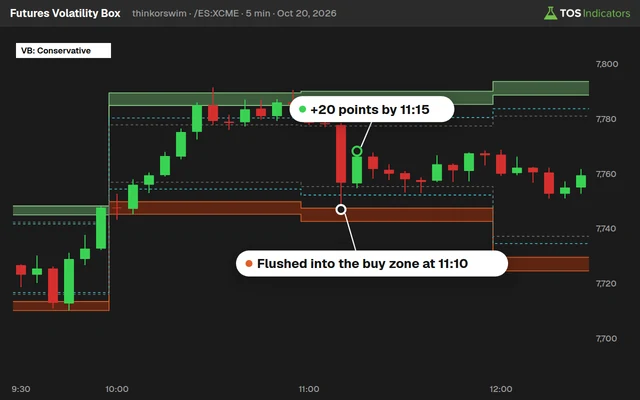 Futures Volatility Box
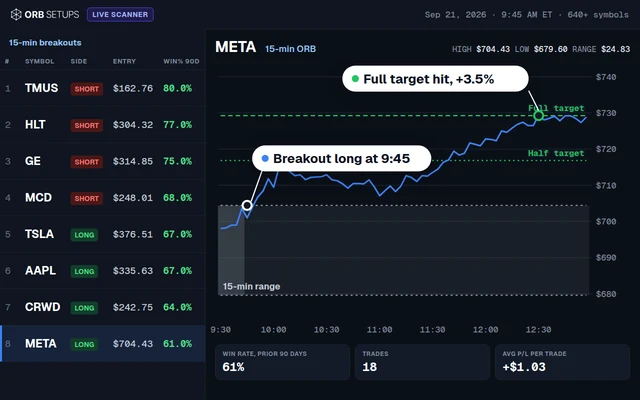 ORB Setups
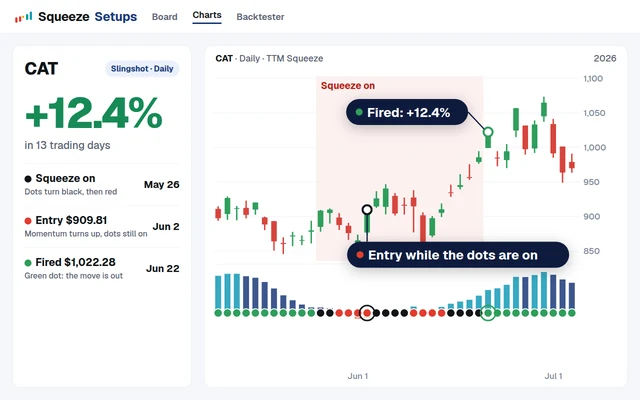 Squeeze Setups
What Is Triple Witching Friday?
Triple witching Friday is the simultaneous expiration of three derivative contracts (stock options, stock index options, and stock index futures) on the third Friday of March, June, September, and December. This quarterly event forces the settlement of billions of dollars in open contracts within a single trading session.
The convergence of these three expirations creates abnormal trading volume and price volatility. Market makers, institutional hedgers, and arbitrageurs all rush to close, roll, or exercise positions before the 4:00 PM ET deadline. The result is a trading environment that behaves unlike any other day of the quarter.
Triple Witching Dates and the Quarterly Expiration Calendar
Triple witching always falls on the third Friday of the final month of each calendar quarter. These four dates represent the highest-volume single-day expirations on U.S. Exchanges. Traders should mark these dates at the start of each year.
| Quarter | Month | 2025 Date | 2026 Date |
|---|---|---|---|
| Q1 | March | March 21, 2025 | March 20, 2026 |
| Q2 | June | June 20, 2025 | June 19, 2026 |
| Q3 | September | September 19, 2025 | September 18, 2026 |
| Q4 | December | December 19, 2025 | December 18, 2026 |
The September and December triple witching dates tend to produce the most pronounced volume spikes because they coincide with quarterly index rebalancing by funds tracking the S&P 500, Russell 2000, and other major benchmarks.
Why Triple Witching Causes Increased Volatility and Volume
Triple witching generates volume surges because three distinct pools of contracts must be settled simultaneously. Each pool (stock options, index options, and index futures) has its own base of participants who need to act before expiration. When all three converge, order flow multiplies.
Market makers carry large hedging positions against the options and futures they have sold. As expiration approaches, they must rapidly adjust delta hedges. This creates feedback loops: price moves force hedge adjustments, which create more price moves, which force further adjustments.
Arbitrageurs add fuel by exploiting any mispricing between index futures, their component stocks, and the options overlaying both. These "program trades" fire in rapid bursts, creating sudden directional moves that reverse just as quickly.
How Volatility Progresses Throughout a Triple Witching Day
Analysis of triple witching sessions using the Volatility Box reveals a consistent intraday volatility pattern. Volatility does not arrive uniformly. It follows a recognizable three-phase structure across the trading day.
Phase 1: Morning Range Expansion (9:30 AM – 11:00 AM ET)
The opening 90 minutes typically show aggressive range expansion. Overnight positioning and pre-market order flow create a wider-than-normal opening range breakout zone. Stocks and index futures both print elevated volatility as the first wave of expiration-related orders hits the tape.
Phase 2: Midday Compression (11:00 AM – 2:30 PM ET)
After the morning rush, volatility contracts significantly. Many expiration-related trades have been executed, and the market enters a holding pattern. This midday compression can trap traders expecting all-day fireworks. Ranges tighten, and breakout attempts fail repeatedly during this window.
Phase 3: End-of-Day Volatility Spike. The "Witching Hour" (2:30 PM – 4:00 PM ET)
The final 90 minutes is where triple witching earns its name. This period historically produces the largest single-session volume burst of the quarter. Contracts approaching expiration force a final wave of rolling, exercising, and closing. Index rebalancing orders often execute in this window as well.
Stock Volatility vs. Futures Volatility on Triple Witching
Research using the Volatility Box and Futures Volatility Box shows that stock and futures volatility do not always move in lockstep during triple witching week. Stocks tend to show volatility expansion earlier in the week, while futures volatility concentrates more heavily on Friday itself.
| Day of Witching Week | Stock Volatility | Futures Volatility | Notable Behavior |
|---|---|---|---|
| Monday | Slightly Elevated | Normal | Early positioning begins in equities |
| Tuesday | Elevated | Slightly Elevated | Options rolling activity increases |
| Wednesday | Elevated | Elevated | Mid-week hedge adjustments peak |
| Thursday | High | High | Pre-expiration gamma exposure spikes |
| Friday (Witching) | Very High | Extreme | Settlement-driven volume and volatility peak |
Futures tend to see the sharpest single-day volatility spike because index futures settle via a special opening quotation (SOQ) process. This forces index arbitrage trades to execute at the open, creating concentrated bursts of directional pressure in the first minutes of the session.
Historical Triple Witching Volume and Price Action Data
S&P 500 triple witching days from 2015 through 2024 show a clear statistical pattern. Average daily volume on triple witching Friday exceeds the 20-day moving average by a significant margin every quarter without exception.
| Metric | Triple Witching Avg | Normal Friday Avg | Difference |
|---|---|---|---|
| SPY Daily Volume | ~120M shares | ~78M shares | +54% |
| ES Futures Volume | ~2.8M contracts | ~1.8M contracts | +56% |
| SPX Intraday Range | 1.3% | 0.85% | +53% |
| Last-Hour Volume Share | 32% | 22% | +45% |
| VIX Avg Level | +1.2 pts above prior day | Flat to -0.3 pts | Notable spike |
20-Year Triple Witching Data Deep Dive (Video Analysis)
This data analysis from TOS Indicators examines every Triple Witching Friday from 2000 through 2020 across four major indices (SPY, QQQ, Dow, and Russell 2000) to quantify what actually happens on these days and build an evidence-based trading game plan.
The Plus-or-Minus 1% Rule
The 20-year data reveals a striking consistency: most Triple Witching Fridays end with the market closing within +/- 1% of the opening price. Across SPY, QQQ, the Dow, and Russell 2000, the typical witching Friday produces a small net change despite the intraday volatility. This statistical tendency is the foundation of the trading strategy below.
September Triple Witching Is Even Flatter
When isolating September Triple Witching specifically, the average move narrows further. Ranging from just +0.23% to +0.53% across the major indices. September witching tends to produce the tightest closing ranges of any quarter, likely because it coincides with the end of the historically weak August–September seasonal window.
Notable Outliers: 2001 and 2008
Two Triple Witching Fridays broke the pattern significantly. The September 2001 session following the 9/11 attacks saw extreme dislocations, and the September 2008 witching Friday. Landing during the peak of the financial crisis bailout announcements. Produced outsized moves in both directions. Outside of these crisis events, the plus-or-minus 1% rule held remarkably well.
Data-Driven Witching Day Game Plan
Based on this 20-year dataset, the optimal Triple Witching game plan focuses on mean reversion rather than trend following:
- Fade morning trends. If the market rallies or drops significantly in the first 90 minutes, the data supports looking for a reversion back toward the opening price rather than chasing the move.
- Avoid trend-following setups. Buying pullbacks into a trend typically fails on witching days because the session tends to produce choppy, two-sided action rather than sustained directional movement.
- Use contrarian entries. Tools like the Volatility Box reversal zones and Squeeze signals can identify out-of-the-money options plays targeting a return to the day's opening level.
How to Trade Around Triple Witching Friday
Trading triple witching requires adjusting your normal approach. The altered market microstructure. Wider spreads, faster moves, and expiration-driven order flow. Demands tactical changes to position sizing, stop placement, and timing.
Strategy 1: Reduce Position Size and Widen Stops
The simplest approach is defensive. Cut your standard position size by 25–50% and widen stops by the same proportion. This accounts for the larger-than-normal intraday swings without abandoning your trading plan entirely. The Multi-Timeframe Squeeze can help identify when compression is about to release.
Strategy 2: Trade the Morning, Avoid the Close
The morning session (9:30–11:00 AM) offers the cleanest trends of the day. After the opening range establishes, directional moves tend to be more sustained than during the chaotic final hour. Close all positions before 2:30 PM to avoid the witching hour turbulence entirely.
Strategy 3: Exploit the Volatility
Experienced traders can use the elevated volatility as an opportunity. The Cumulative TICK indicator helps identify when institutional order flow is heavily one-sided, creating high-probability mean-reversion setups during the final hour's overshoots. Monitoring the VVIX can also provide early warning of extreme volatility conditions.
Strategy 4: Use Supply and Demand Zones
Triple witching days often respect major supply and demand zones because institutional players are executing large orders at predetermined price levels. These zones act as magnets during the settlement process, providing reliable support and resistance levels.
ThinkScript: Triple Witching Date Label and Alert
This ThinkScript code identifies triple witching Fridays on your thinkorswim charts. It plots a label when the current day is a triple witching date and can trigger an alert to remind you to adjust your trading plan.
# Triple Witching Friday Identifier
# Fires on the 3rd Friday of March, June, September, December

def month = GetMonth();
def dom = GetDayOfMonth(GetYYYYMMDD());
def dow = GetDayOfWeek(GetYYYYMMDD());

# Quarter-end months: 3, 6, 9, 12
def isQuarterEndMonth = month == 3 or month == 6 or month == 9 or month == 12;

# Third Friday: Friday (dow == 5) with day of month between 15 and 21
def isThirdFriday = dow == 5 and dom >= 15 and dom <= 21;

# Triple Witching Friday
def isTripleWitching = isQuarterEndMonth and isThirdFriday;

# Plot arrow on chart
plot TWSignal = if isTripleWitching then low * 0.998 else Double.NaN;
TWSignal.SetPaintingStrategy(PaintingStrategy.ARROW_UP);
TWSignal.SetDefaultColor(Color.MAGENTA);
TWSignal.SetLineWeight(3);

# Add label
AddLabel(isTripleWitching, " TRIPLE WITCHING FRIDAY ", Color.MAGENTA);

# Alert
Alert(isTripleWitching and SecondsFromTime(0930) == 0,
      "Triple Witching Friday - Adjust position sizing",
      Alert.BAR, Sound.Ding);
Add this script to any chart in thinkorswim. On triple witching days, a magenta label appears and an arrow marks the session. The alert fires at market open as a reminder to implement your witching-day trading adjustments.
# Triple Witching Week Volatility Monitor
# Tracks relative volume and range expansion during witching week

def month = GetMonth();
def dom = GetDayOfMonth(GetYYYYMMDD());
def dow = GetDayOfWeek(GetYYYYMMDD());

def isQuarterEndMonth = month == 3 or month == 6 or month == 9 or month == 12;
def isThirdFriday = dow == 5 and dom >= 15 and dom <= 21;

# Witching week: 5 trading days ending on third Friday
def isWitchingWeek = isQuarterEndMonth and dom >= 11 and dom <= 21;

# Relative volume (current vs 20-day average)
def avgVol = Average(volume, 20);
def relVol = if avgVol > 0 then Round((volume / avgVol) * 100, 0) else 0;

# Range expansion
def avgRange = Average(high - low, 20);
def relRange = if avgRange > 0 then Round(((high - low) / avgRange) * 100, 0) else 0;

AddLabel(isWitchingWeek,
    "Witching Week | RelVol: " + relVol + "% | Range: " + relRange + "%",
    if relVol > 130 then Color.RED else if relVol > 110 then Color.YELLOW else Color.GREEN);
Triple Witching vs. Quad Witching: What Changed
From 2002 to 2020, single stock futures traded on U.S. Exchanges alongside the original three derivative types. During that period, four contracts expired simultaneously, earning the name "quad witching." OneChicago, the sole U.S. Exchange for single stock futures, closed in September 2020.
Today, only three contract types expire on witching Friday (stock options, index options, and index futures) making "triple witching" the technically correct term again. However, the practical market impact remains similar because single stock futures never accounted for significant volume relative to the other three.
| Feature | Triple Witching (Current) | Quad Witching (2002–2020) |
|---|---|---|
| Contracts Expiring | 3 types | 4 types |
| Single Stock Futures | Not included | Included |
| Volume Impact | Very High | Very High (marginal difference) |
| Frequency | 4x per year | 4x per year |
| Current Status | Active | Defunct since Sept 2020 |
Risk Management Checklist for Triple Witching
Every triple witching Friday demands a pre-session risk review. This checklist ensures you have accounted for the unique conditions of the session before placing any trades.
Review open positions the night before. Any position with a short-dated option component is especially vulnerable to gamma risk on witching day. Consider closing or rolling these positions on Thursday to avoid the Friday expiration chaos.
Practical Takeaways for Triple Witching Trading
Triple witching Friday is a known, scheduled event. Not a surprise. Traders who prepare for it consistently outperform those who treat it as just another Friday. The volatility is structural, not random, and understanding its three-phase pattern gives you a clear tactical advantage.
Use the Volatility Box to measure real-time volatility expansion relative to normal levels. Combine it with the Opening Range Breakout strategy for the morning session, and the Cumulative TICK for afternoon mean-reversion setups if you choose to trade the close.

 Best ThinkOrSwim Indicators: 15 Custom Studies Every Trader Needs
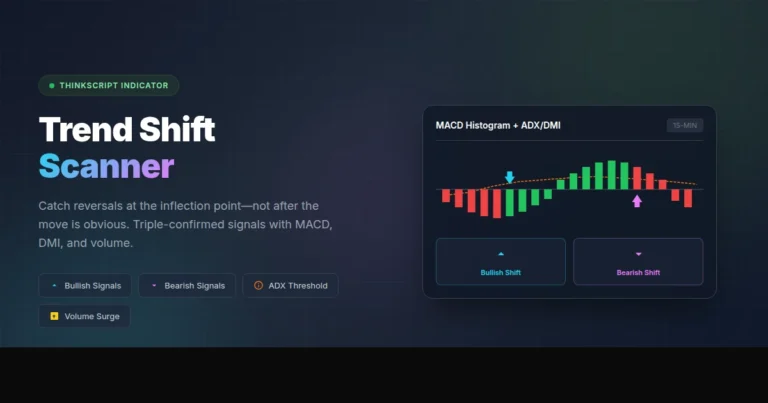 Trend Shift Scanner: Catch Reversals at the Inflection Point
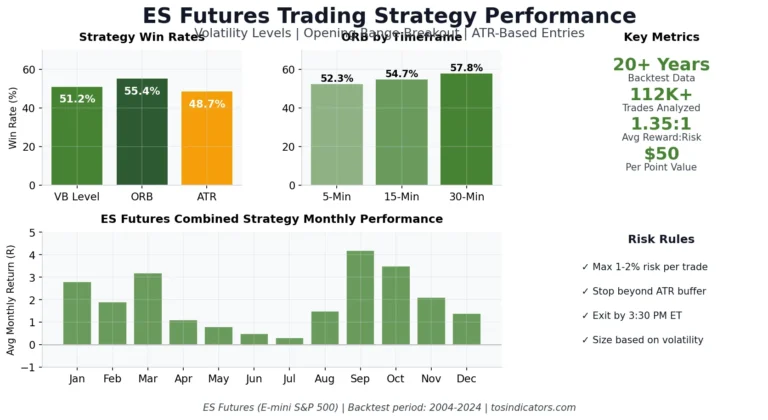 ES Futures Trading Strategy: Volatility Levels, ORB, and ATR-Based Entries
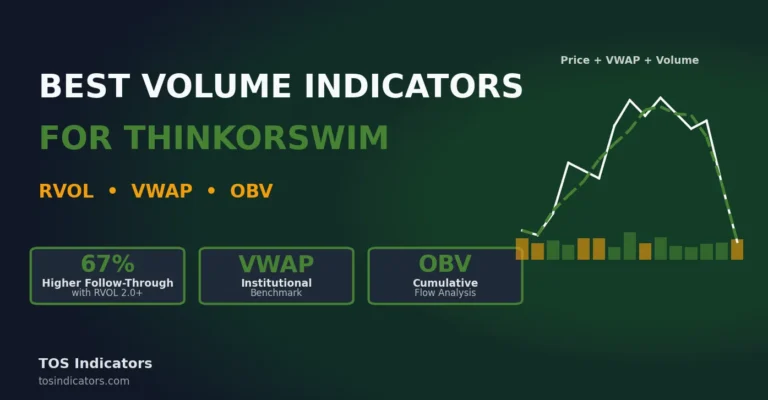 Best Volume Indicators for ThinkOrSwim: Relative Volume, VWAP, and OBV
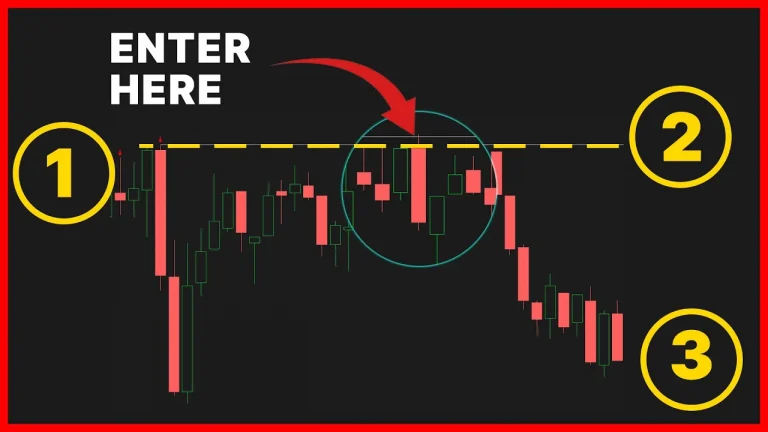 Stop Hunting – “Put your entry where the masses put their stops”