
 Fair Value Gap
 False Breakout Scanner
 Heiken Ashi Trend
 Stock Volatility Box
 Futures Volatility Box
 ORB Setups
 Squeeze Setups
Which market gives you the best results with the Opening Range Breakout strategy? In the companion video above, we apply the same ORB backtester with identical settings to three markets: SPY (S&P 500), QQQ (NASDAQ), and AAPL (Apple). The results show a clear winner.
What Is the Opening Range Breakout Strategy?
The Opening Range Breakout (ORB) measures the high and low price range during the first 30 minutes of the trading session (9:30 to 10:00 AM ET). Traders enter long when price breaks above the range high, or short when price drops below the range low. The strategy captures the directional bias created by institutional order flow during the opening auction.
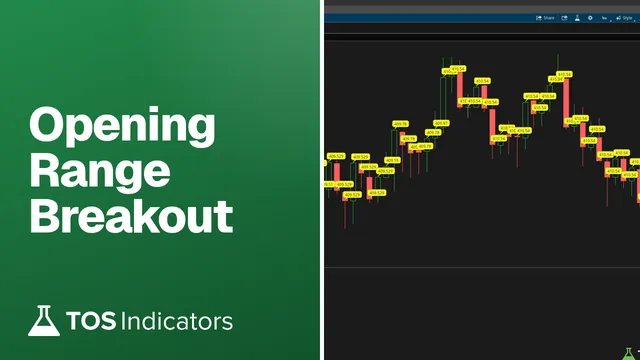
If you are new to the ORB concept, watch the opening range breakout tutorial (linked in the video description) for a full overview. You can also download the free ORB indicator for ThinkOrSwim to follow along on your own charts.
Backtest Settings Used Across All Three Markets
To make a fair comparison, we applied identical settings to all three charts:
- Chart: 5-minute, 30 days of data
- Entry type: Wick touch (trade triggers as soon as price touches the breakout level)
- Stop: Half range
- Target: Half range
- Opening range: First 30 minutes (9:30 to 10:00 AM ET)
- Trade window: The 30-minute period immediately following the opening range
The backtester tracks every breakout trade within these parameters and reports win/loss counts for both long and short side entries separately. The Volatility Box membership includes the full ORB backtester used in this analysis.
SPY Results: Strategy Underperformed
SPY produced the worst results of the three markets. Over the 30-day period, the backtester logged 32 total breakouts: 18 on the long side and 14 on the short side. Win rates on both sides hovered near or below 50%. The P&L graph was clearly negative across the period.
The average opening range for SPY was $1.58. With a half range stop and half range target, the risk-reward is 1:1, and with win rates at the coin-flip level, the strategy did not produce a profitable edge on SPY during this window.
QQQ Results: Mixed Performance
QQQ (NASDAQ 100 ETF) showed an improvement over SPY but still fell short of a reliable edge. Over 30 days, the backtester logged 30 total breakouts: 14 long and 16 short. Win rates were poor on both sides, similar to SPY.
The P&L graph told a more nuanced story than SPY. There were clear patches of green (profitable periods) mixed with patches of red (losing periods). The strategy worked during certain stretches but gave the gains back during others. The average opening range was $1.72.
QQQ's larger average opening range compared to SPY ($1.72 vs. $1.58) means the absolute dollar risk per trade is higher. Without a win rate above 50%, that wider range works against you.
AAPL Results: The Clear Winner
Apple produced the best results of the three markets with the same settings. The P&L graph was visibly green across the 30-day period, a stark contrast to SPY and QQQ.
The numbers: 23 total breakout trades. On the long side, 13 trades with 9 winners and 4 losers for a 69% win rate. On the short side, 10 trades with 5 winners and 5 losers for a 50% win rate. The average opening range was $0.95.
AAPL's long-side win rate of 69% stands out. Combined with a 1:1 risk-reward (half range stop, half range target), a 69% win rate produces a positive expected value per trade. The short side at 50% is a coin flip, suggesting the ORB strategy on AAPL is more effective as a long-biased setup during this period.
Why AAPL Outperformed SPY and QQQ
A few factors explain why AAPL's ORB results were stronger:
AAPL's $0.95 average opening range is narrower than SPY ($1.58) and QQQ ($1.72). A tighter opening range means the breakout level is closer to the consolidation center, and the half range target is a shorter distance. Narrower ranges can be easier to "complete" because price needs less follow-through to reach the target.
Individual stocks can also exhibit stronger opening-session trends than index ETFs. SPY and QQQ aggregate hundreds of components, which can dilute directional moves. AAPL, as a single stock, can move more decisively in one direction when institutional buyers or sellers step in at the open.
Next Steps: Extend and Customize the Analysis
The video tests one set of parameters over 30 days. You can take this further by adjusting several variables:
- Change the entry type from "wick touch" to "close above" to require a candle close beyond the breakout level before triggering the trade. This adds a confirmation step that may reduce false breakouts.
- Test different timeframes. The 30-minute ORB was used here, but you can also test the 15-minute or 5-minute opening range.
- Extend the lookback period beyond 30 days to see whether the same market rankings hold over longer periods.
The ORB backtester is available to Volatility Box members and works on any stock or futures market. Apply it to your preferred instruments to find where the strategy performs best for your trading style.
For those without the backtester, the free Opening Range Breakout indicator plots all the ORB levels on your chart so you can manually review historical sessions.
Frequently Asked Questions
Which market performed best with the ORB strategy?
AAPL produced the best results with a 69% win rate on the long side over a 30-day backtest. QQQ showed mixed results with patches of profitability, and SPY was the weakest with win rates near or below 50% on both sides. All three used identical backtester settings.
What settings were used in the backtest?
5-minute chart, 30 days of data, wick touch entry, half range stop, half range target, 30-minute opening range (9:30 to 10:00 AM ET), with the trade window in the 30 minutes following the opening range.
Why did AAPL perform better than SPY and QQQ?
AAPL had a narrower average opening range ($0.95 vs. $1.58 for SPY and $1.72 for QQQ), requiring less follow-through to reach targets. As a single stock, AAPL can also exhibit stronger directional moves at the open compared to index ETFs that aggregate hundreds of components.
Should I trade only the long side of the AAPL ORB?
During this 30-day period, the long side (69% win rate) significantly outperformed the short side (50%). This suggests a long bias may be more effective, though you should test across different market conditions. Bear markets or high-volatility environments may shift the balance toward short-side setups.
Can I run this same comparison on other stocks?
Yes. The Volatility Box ORB backtester works on any stock or futures market. Apply the same settings to any ticker and compare the results. The process shown in the video (same settings, multiple markets, compare P&L graphs) is a repeatable framework for finding which instruments suit the ORB strategy.
Where can I download the ORB backtester?
The backtester is available to Volatility Box members. A download link is in the video description. The free ORB indicator (available to everyone) plots the opening range levels on your chart but does not include automated backtesting statistics.
 How to Identify and Trade False Breakouts
 Opening Range Breakout (ORB) Indicator for ThinkOrSwim
 Best ThinkOrSwim Indicators: 15 Custom Studies Every Trader Needs
 Trend Shift Scanner: Catch Reversals at the Inflection Point
 ES Futures Trading Strategy: Volatility Levels, ORB, and ATR-Based Entries